India has a rich historical past. Incredible India features hundreds of noteworthy monuments located in different parts of the country, especially in the popular tourist cities of Mumbai and Delhi.
To help you narrow down the best landmarks in India to visit, We curate this list to add to your Bucket List.
1.Taj Mahal, Agra
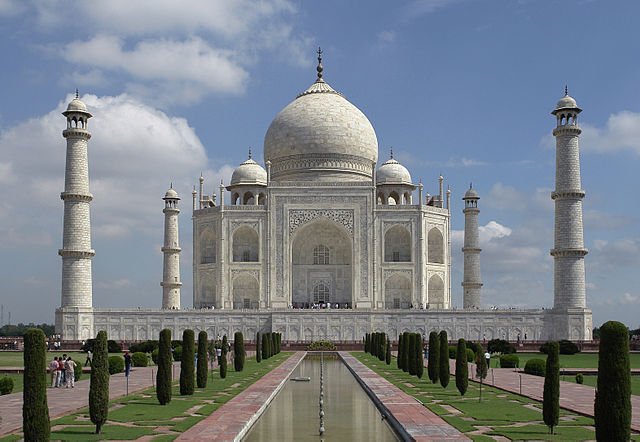
The first thing that comes to a visitor’s mind when they think about India is, undoubtedly, the Taj Mahal. Located in the city of Agra, it is an architectural masterpiece made completely with white marble. It’s also a Seven Wonder of the World and a place to visit for your India bucket list. The palace was constructed by Shah Jahan for his wife, Mumtaz Mahal, in 1648.
And besides the architectural beauty, the Taj Mahal also offers some of the best sunrise views.
2. Red Fort, Delhi
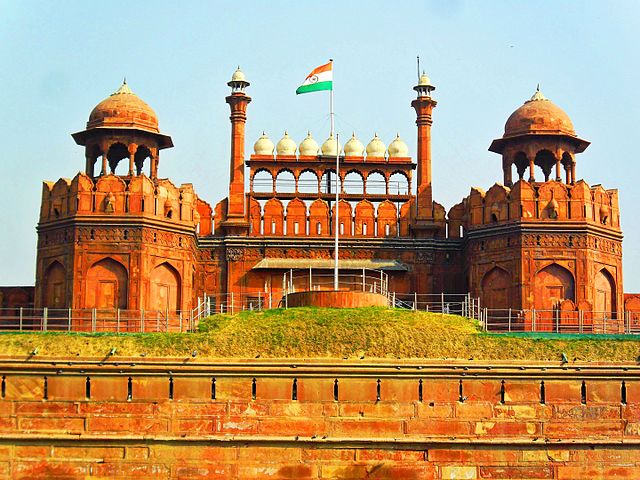
The Red Fort is considered to be the most prominent historical monument in old Delhi. Constructed by Emperor Shah Jahan in 1639, it was built when the kingdom decided to shift its capital from Agra to Delhi.
It was built using red sandstones hence the name Red Fort. Today, it houses museums and serves as a ceremonial ground where India hoists its national flag on independence day every year, this UNESCO World Heritage Site now contains a museum and is one of the city’s top tourist destinations.
3.Hawa Mahal, Jaipur
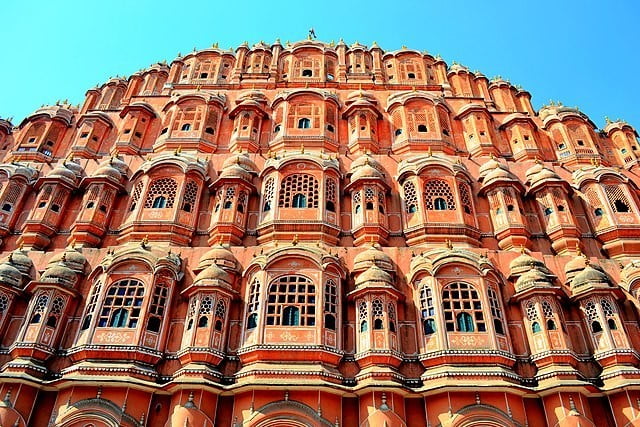
Located 300km from India’s capital Delhi, Hawa Mahal is a beautiful palace seated in the city of Jaipur. Also known as the palace of winds, it is one of the famous Indian landmarks to visit in the city. It is a five-story building made in a pyramidal shape and stands 15-metres tall. Maharaja Sawai Pratap Singh constructed the 5 story building in 1799 as an extension of the Royal City Palace.
From Hawa Mahal, there’s a view of Jantar Mantar, the City Palace, and the bustling streets of Jaipur.
4. The Golden Temple, Amritsar
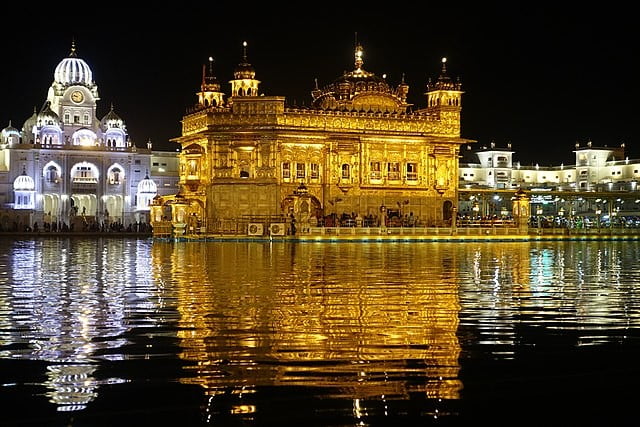
The Golden Temple is an Indian landmark known for its beautiful golden walls. This beautiful temple in Amritsar is the holiest pilgrimage site for people who follow the Sikh faith. It is centered on a holy pond known as Amrit Sarovar which makes it appear like it’s floating on water. When you reach the Golden Temple, the first thing you notice is the perfect blend of gorgeous architecture, captivating peace, and warm hospitality. Millions of devotees visit here from all corners of the world to seek spiritual solace and blessings.
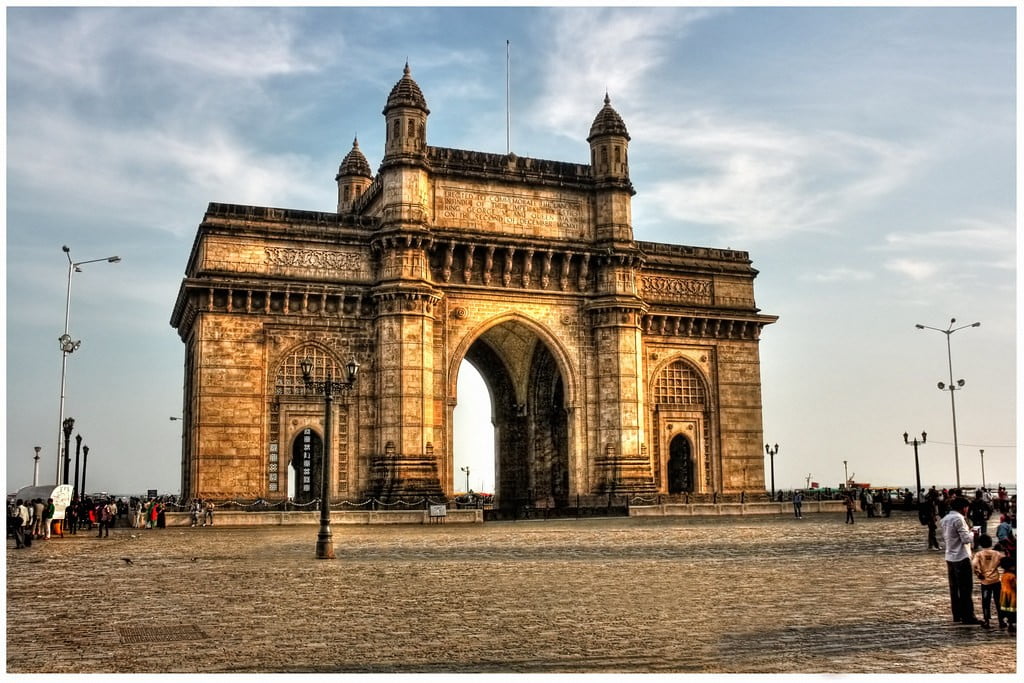
5. Gateway Of India, Mumbai
The monument got its name as it served as the entrance point for British Viceroys when they arrived in India. It is located at the apex of Apollo Bunder and overlooks the Arabian Sea. Gateway of India has now become synonymous with Mumbai and is a favorite amongst both locals and tourists. Additionally, the area is always bustling with street vendors, tea hawkers, balloon sellers, street-food stalls, and much more, Located by the Arabian Sea in a colorful area with street food stalls, it is opposite the Taj Mahal Palace, so wandering around this area is one of the things to do in Mumbai.
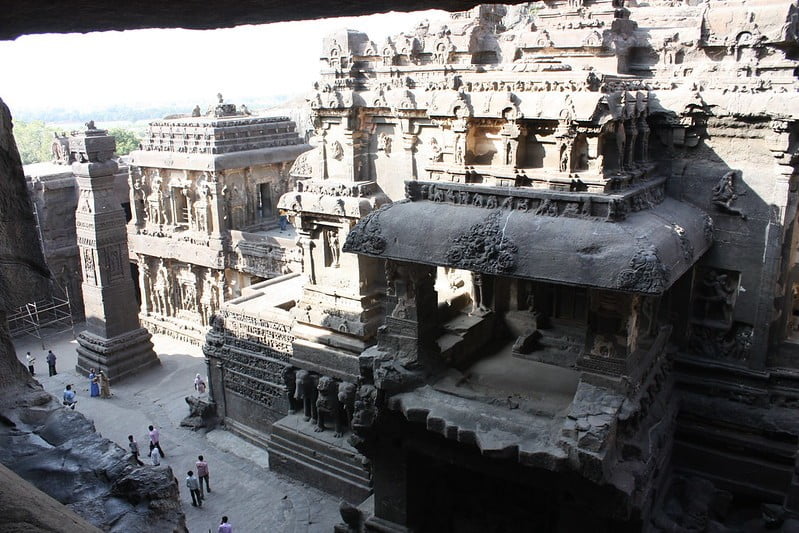
6. Ajanta & Ellora Caves, Maharastra
Maharashtra’s Ajanta and Ellora Caves are some of the finest examples of ancient Indian art in existence. The former comprises a series of Buddhist rock-cut memorials, the earliest of which date to the second century BCE; the latter includes Hindu, Jain, and Buddhist temple complexes, constructed between 600-1,000 CE. Both are breathtaking to behold. These magnificent caves are home to some rare sculptures of the culture and tradition of that age. It’s magical how the figures nestled in these caves are almost unscathed by time. Each cave within has a different story to tell with a quaint sense of tantric Buddhism from his past lives to his rebirths. These caves are home to some of the earliest monasteries and worship-halls of diverse Buddhist customs etched into a 250-feet solid rock wall
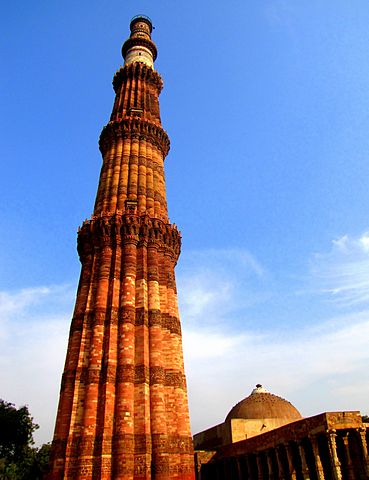
7. Qutub Minar, New Delhi
Qutub Minar UNESCO world heritage built a 73-meter tall tower of victory, the Qutub Minar, right after the defeat of the last Hindu kingdom in Delhi. Constructed in 1193, the building comprises five different storeys, each with a separate projecting balcony.
It forms a part of the Qutub Complex comprising the Quwwat-ul-Islam Mosque, Alai Darwaza, Alai Minar, Ala-ud-din’s Madrasa, and Tomb, Iron Pillar, Tomb of Imam Zamin, Sanderson’s Sundial, and Major Smith’s Cupola.
The highlight of this tower of victory is a 7m (23ft) pure iron pillar that is more than 6 tons and has resisted corrosion for centuries.
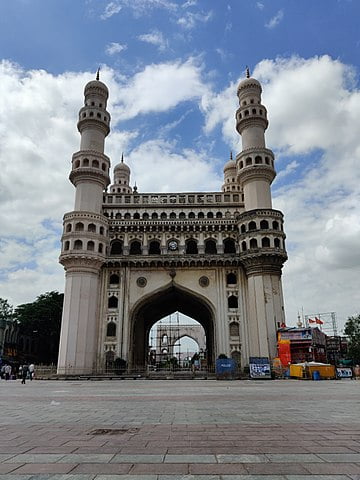
8. Charminar, Hyderabad
Charminar was built to mark the eradication of the epidemic cholera that had ravaged the city in the 16th century. Lying on the east bank of the Musi river with the Laad Bazaar to its west and Makkah Masjid to the south-west, Charminar is a cultural and historical landmark that translates into four miners or pillars in Urdu. The area around the monument is also referred to as Charminar, and for a first-timer, a tour of the Nizam city is incomplete without taking in the infectious energy of the place where it all began. Albeit traffic-ridden, the bazaars are still chaotic with their labyrinthine by-lanes heaving with hawkers, bangle sellers, and food stalls.
9. Meenakshi Temple, Madurai
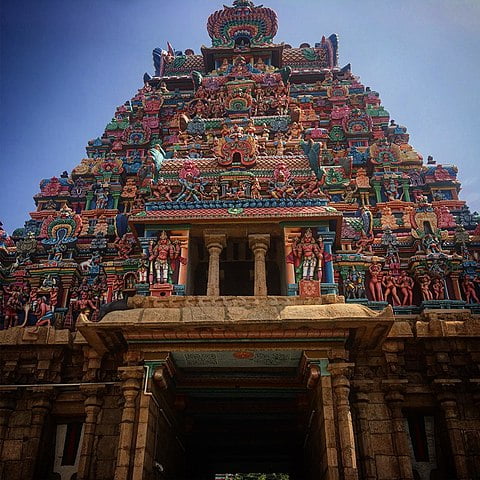
Meenakshi Temple is situated on the Southern banks of the Vaigai River in the temple city Madurai. This temple is dedicated to Parvati and her consort, Shiva, and is visited by most Hindu and Tamil devotees and architectural lovers throughout the world. It is believed that this shrine houses 33,000 sculptures in its 14 gopurams. It’s no doubt one place to visit if you are impressed with the art and cultural history. It is also one of the main attractions of South India with thousands of devotees thronging it every day. During the ‘Tirukalyanam Festival,’ which takes place over a period of 10 days, the temple attracts more than a million devotees. Despite many people visiting it every day, the temple is well-maintained and was named the ‘Best Swachh Iconic Place’ (cleanest iconic place) in India.
10. Mysore Palace, Mysore
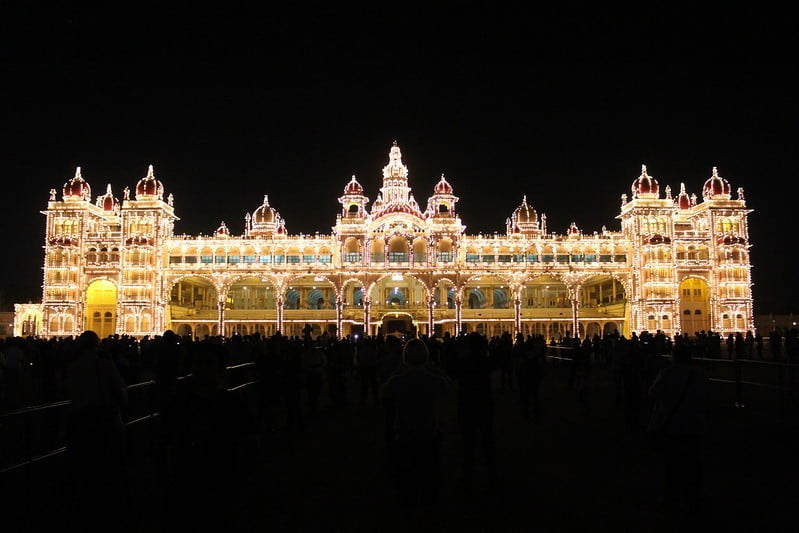
The Mysore Palace, also known as Amba Vilas Palace, is a historical palace and the royal residence at Mysore in the Indian state of Karnataka. It is used to be the official residence of the Wadiyar dynasty and the seat of the Kingdom of Mysore. Commonly described as the City of Palaces, this is the most famous tourist attraction in India after the Taj Mahal. It is a sight not to be missed with its spacious halls, lovely art paintings, and Indo-Saracenic style architecture. The best time to visit is at night due to the astonishing illuminated lights covering the whole monument.