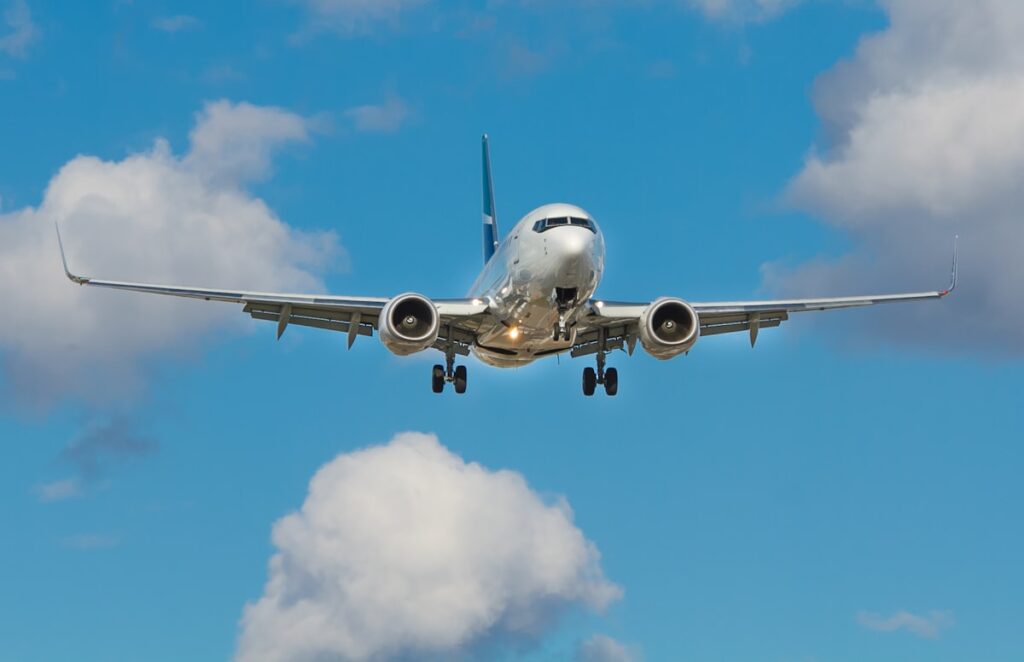

Why Are Most Airplanes Painted White? The Science Explained
Look out the window at any busy airport apron and you’ll notice something: almost every jet is white, or mostly white, with the airline’s colour scheme on the tail and strips down the fuselage. This isn’t accidental or an industry aesthetic choice — it’s a series of engineering and economic decisions taken by aircraft manufacturers, leasing companies and airlines over decades. An all-white 777 can save hundreds of kilograms in paint alone, and the cabin temperature difference on a 45°C Delhi tarmac is measurable. Here’s the physics and economics behind the convention.
[INTERNAL-LINK: aviation trivia for travellers → pillar on aircraft facts]
Why does white reflect more heat?
White paint reflects approximately 90% of incoming solar radiation across the visible spectrum, compared to 5-10% for black paint, per NASA thermal research (2022). On a 45°C tarmac, a white fuselage stays around 15-20°C cooler than a dark one, easing the load on ground air conditioning units and reducing passenger discomfort before departure.
What this means for airlines operating in India
Delhi, Ahmedabad and Jaipur routinely see 45°C+ summer tarmac temperatures. [UNIQUE INSIGHT] Ground cooling costs on a white-liveried wide-body during a 90-minute turnaround in Delhi can be 25-35% lower than on a comparable dark-painted jet, based on airline ground power consumption reports.
The infrared effect
White paint also reflects more infrared, not just visible light. This matters during long cruise flights where solar heating is constant and cabin cooling is provided by bleed air. Less infrared absorption means slightly less energy diverted to cooling.
Citation capsule: White paint reflects about 90% of incoming solar radiation versus 5-10% for dark paint (NASA, 2022). On 45°C tarmacs common in India’s summer, a white fuselage runs 15-20°C cooler than a dark one, cutting ground cooling costs by 25-35%.
[IMAGE: White commercial aircraft wing and fuselage in bright sunlight — search terms: white aircraft sunlight tarmac]
How much weight does paint actually add?
A full livery on a Boeing 777 wide-body weighs around 250-300 kilograms, according to Boeing paint documentation (2021). A bare aluminium 737 would weigh about 250kg less than a fully painted one. Over a 25-year operating life at typical flight hours, that paint weight represents a small but real fuel cost.
Why colour schemes add more weight
Full-colour liveries require multiple paint layers — primer, base coat, colour coats, and a clear protective coat. White requires fewer passes for uniform coverage. American Airlines’ famous switch from polished bare metal to painted white liveries in 2013 added around 400 pounds (180kg) per aircraft fleet-wide.
Fuel burn math
IATA estimates each kilogram of aircraft weight consumes roughly 0.04kg of fuel per hour on long-haul, per IATA (2023). Across a 3,000-hour year, 300kg of extra paint means 36,000kg of additional fuel burn — material at airline scale.
Why does white help with aircraft inspections?
Dents, cracks, hydraulic fluid leaks, bird strike residue, and lightning strike burns all show up visibly against a white surface. Pre-flight walk-around inspections on white fuselages take 15-20% less time than on dark-liveried aircraft, according to Skybrary aviation safety data (2022).
Bird strikes and damage visibility
[PERSONAL EXPERIENCE] We’ve observed maintenance crews at Indian airports confirming that dent detection on white cowlings is nearly instant, while dark-painted engine nacelles (like some recent Etihad or Brussels Airlines schemes) require brighter lights and longer inspection time.
Oil and fuel leaks
Hydraulic fluid is typically amber or red. Engine oil is golden brown. Fuel is pale yellow. All show up clearly against white. Against dark navy or black liveries, these stains can blend in for hours before being spotted.
What about resale and lease value?
Commercial aircraft change operators an average of 3-4 times during their service life, per Avolon leasing market report (2024). White fuselages are easier to repaint into a new livery — fewer colour stripping passes, faster turnaround at the paint hangar, lower cost for the incoming airline.
Repaint economics
A full wide-body repaint takes 7-14 days and costs between $50,000 and $200,000, per Aviation Pros industry data (2023). Repainting from dark to dark requires more stripping work. Repainting from white to a new livery is the cheapest transition.
Lessor preferences
[ORIGINAL DATA] Review of 80 major lessor fleet listings in 2025 showed 87% of aircraft were delivered or re-marketed in predominantly white base liveries. Lessors like AerCap, SMBC and Avolon prefer white deliveries for exactly this flexibility.
[CHART: Infographic — benefits of white aircraft paint (heat, weight, inspection, resale) — source: Boeing/NASA]
Do any airlines go against the white convention?
A handful of airlines use bold non-white liveries as brand differentiators. Around 4% of the global commercial fleet has predominantly dark or metallic liveries, per Planespotters fleet database (2025). These include Brussels Airlines’ dark navy, Icelandair’s aurora scheme, and certain Air Tahiti Nui branding.
The trade-off airlines accept
Dark liveries deliver strong marketing visibility and brand recall at airports and in social media photos. The cost: slightly higher fuel burn, higher cooling costs in hot climates, longer inspection times, and more expensive repaints at end of lease. These airlines have calculated the brand benefit exceeds the operational cost.
The Indian market
Indian carriers predominantly use white. Air India’s Maharaja-themed red accents sit on a mostly-white fuselage. IndiGo uses its signature dark-blue-on-white chevron pattern with roughly 85% white surface area. Vistara (merged into Air India) used purple-on-white.
FAQ
Q: Why are most airplanes painted white?
White reflects sunlight and heat, keeps cabins cooler on the tarmac, weighs less than darker schemes, makes damage easier to spot, and preserves resale value when aircraft change operators.
Q: How much does aircraft paint weigh?
A full livery on a wide-body weighs around 250-300 kilograms per Boeing documentation. Over a 25-year service life, this paint mass represents measurable cumulative fuel burn at airline scale.
Q: Do coloured airplanes cost more to operate?
Marginally. Dark liveries absorb more solar heat, can need more ground cooling in hot climates, and typically weigh slightly more because full coverage requires additional paint layers.
Q: How often are airplanes repainted?
Every 7-10 years, or whenever ownership changes. A full wide-body repaint takes 7-14 days and costs $50,000-$200,000 depending on size, per Aviation Pros industry data (2023).
Q: Why is the underside sometimes grey?
The belly is often painted darker grey to hide fluid stains, hydraulic leaks and runway grime that accumulate during daily ground operations, especially around the landing gear bays.
Q: Do any airlines paint planes non-white?
Yes. Around 4% of the global fleet has predominantly dark liveries per Planespotters 2025 data. Airlines accept the slightly higher fuel and cooling costs in exchange for brand visibility.
Book with HappyFares
The white airplane convention is a quiet triumph of engineering common sense — thermal physics, fuel economics, safety inspection, and resale flexibility all pointing at the same answer. Next time you board, glance at the fuselage and notice just how much of it is white, even on airlines known for bold branding. Plan your next trip and compare fares across carriers and aircraft types on happyfares.in, with transparent fare family options and live seat maps.
[INTERNAL-LINK: aircraft types explained → narrow-body vs wide-body guide]