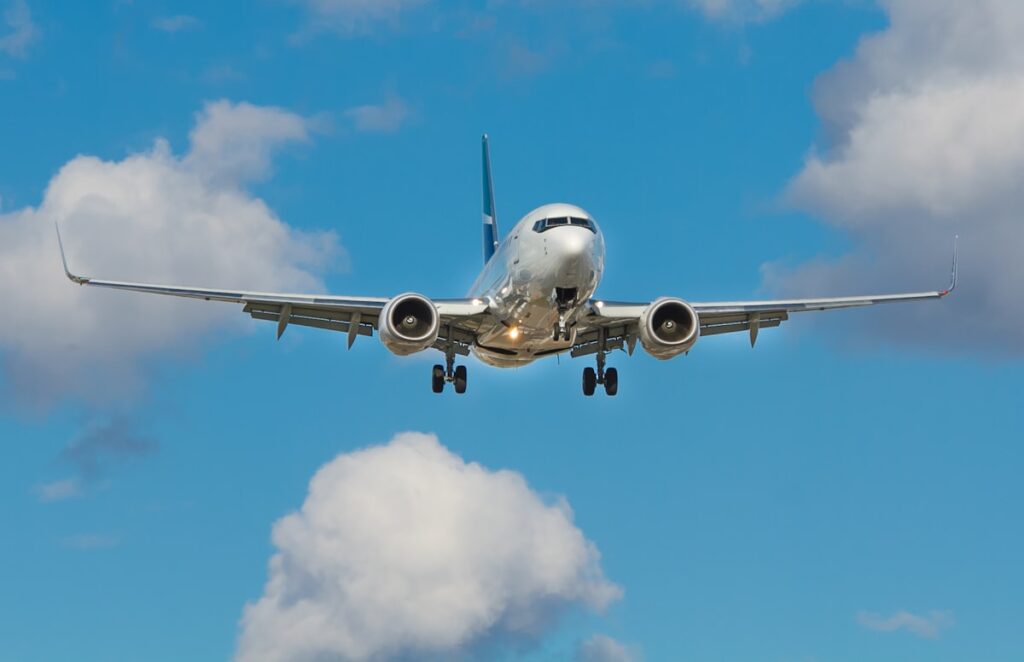

Narrow-Body vs Wide-Body Aircraft — What Indian Flyers Should Know
Most Indian travellers board an Airbus A320 for their first flight — it’s what IndiGo, Air India Express, and Akasa use for domestic hops. But the aircraft on your Delhi-Dubai leg might be a single-aisle jet, while the same airline’s Delhi-Frankfurt leg uses a twin-aisle wide-body with 10 seats across. Global narrow-body deliveries outpaced wide-bodies 3:1 in 2024 per IATA (2025), but comfort and service expectations differ sharply between the two categories. Here’s what actually changes for you as a passenger.
[INTERNAL-LINK: aircraft types explained → pillar on planes]
What defines a narrow-body aircraft?
A narrow-body has one aisle, typically 3-3 seating (six abreast) or 2-3 on regional jets, and a fuselage width around 3.5-4.0 metres. The global narrow-body fleet reached 20,800 aircraft in 2024, representing 70% of the commercial fleet, per IATA World Air Transport Statistics (2025).
Common narrow-body types
The A320 family (A318, A319, A320, A321) and the Boeing 737 family (737-700, 737-800, 737-900, 737 MAX variants) dominate. Airbus A220 and Embraer E-Jets serve regional and low-density markets. IndiGo, for example, operates 380+ A320 and A321 aircraft as of late 2025.
Typical range and use case
Modern narrow-bodies like the A321XLR and 737 MAX 8 can fly 7-9 hours with reduced payload. Most operate 1-6 hour routes. Indian domestic flying is 90%+ narrow-body, and short-haul international like Gulf, Southeast Asia, and Sri Lanka uses them extensively.
Citation capsule: Narrow-body aircraft have one aisle and 3-3 or 2-3 seating, making up 70% of the global commercial fleet at 20,800 aircraft in 2024 (IATA, 2025). Indian domestic flying is 90%+ narrow-body, with IndiGo operating 380+ A320 and A321s as of late 2025.
[IMAGE: Airbus A320 aircraft on runway taking off — search terms: airbus a320 runway takeoff]
What defines a wide-body aircraft?
A wide-body has two aisles, 2-4-2 / 3-3-3 / 3-4-3 seating, and a fuselage width of 5.5-6.5 metres. The global wide-body fleet was around 5,700 aircraft in 2024 per IATA (2025), roughly one-quarter the size of the narrow-body fleet but responsible for a disproportionate share of revenue.
Common wide-body types
Boeing 777, 787 Dreamliner, 747 (legacy), Airbus A330, A350 and A380. Most Indian long-haul international flights to Europe, North America, Australia and East Asia use these types.
Typical range and use case
Wide-bodies fly 8-16 hour routes without refuelling. The A350-900ULR can do 17-18 hours (Singapore to New York non-stop, as one example). They carry 250-500 passengers and dominate premium long-haul.
How does passenger comfort differ?
Cabin width, not just seat size, shapes the comfort gap. A wide-body fuselage is 150-200cm wider than a narrow-body, according to SeatGuru aircraft data (2024). That extra space translates to aisle width, bin space, and a less claustrophobic feel — especially on flights over 4 hours.
Seat dimensions
Economy seat width on a narrow-body A320 is typically 17.5-18 inches. On a wide-body 787 or A350, width is 17-18 inches at 3-3-3. Pitch ranges 30-32 inches in both categories. The real difference is aisle width and galley space.
What you’ll notice onboard
[PERSONAL EXPERIENCE] We’ve found the biggest comfort gap is in overhead bin volume and lavatory count. A 5-hour narrow-body flight like Mumbai-Jakarta feels more cramped than a 6-hour wide-body Delhi-Dubai-Johannesburg because bins fill up and there are only 2-3 lavatories for 180 people.
How do onboard services differ?
Full meals are standard on long-haul wide-body flights, while narrow-body routes under 3 hours often carry buy-on-board or snack-only catering. Global airline catering spend for long-haul reached $16 billion in 2024 per Statista (2025), concentrated heavily on wide-body operations.
Entertainment
Most modern wide-bodies offer seat-back IFE with 100-1,000 hours of content. Narrow-bodies increasingly use streaming-to-device models. IndiGo’s domestic flights don’t carry any IFE. Air India’s A350s have full seat-back systems.
Baggage allowances
Baggage is set by fare and route, not aircraft, but patterns exist. International long-haul Economy on wide-bodies typically offers 23-46kg checked. Domestic narrow-body fares in India often include 15kg checked + 7kg cabin on full-service carriers, less on ultra-low-cost fares.
[CHART: Comparison table — typical narrow-body vs wide-body specs — source: Airbus/Boeing spec sheets 2025]
Which aircraft do Indian airlines use?
Indian carriers operate around 810 aircraft collectively as of Q1 2026 per DGCA (2026), with roughly 93% narrow-body. Only Air India operates a substantial wide-body fleet — 777s, 787s, and incoming A350s — while IndiGo’s first wide-body A350-900 is scheduled for 2027 delivery.
Domestic Indian flying
All domestic routes use narrow-body aircraft. The A320 and A321 dominate, with Boeing 737-800 and 737 MAX on Air India Express, Akasa and SpiceJet.
International from India
[UNIQUE INSIGHT] Roughly 65% of international seats out of India are on foreign wide-body carriers (Emirates, Qatar Airways, Etihad, Lufthansa, Singapore Airlines, etc.), based on aggregated Q1 2026 schedule data. Indian carriers account for the remaining 35%, largely through Air India’s 777 and 787 fleet and IndiGo’s narrow-body short-haul international services to the Gulf and Southeast Asia.
FAQ
Q: What is a narrow-body aircraft?
A single-aisle jet with 3-3 or 2-3 seating. Examples: A320, A321, Boeing 737 family, A220, Embraer E-Jets. Range is typically 2-7 flight hours. They make up 70% of the global commercial fleet.
Q: What is a wide-body aircraft?
A twin-aisle jet with 2-4-2, 3-3-3 or 3-4-3 seating. Examples: Boeing 777, 787, 747, Airbus A330, A350, A380. Range 8-16 hours. Around 5,700 wide-bodies in the global fleet in 2024.
Q: Why do short domestic flights use narrow-bodies?
Lower operating costs per hour, 25-40 minute turnarounds, and right-sized capacity for 1-4 hour routes where a wide-body would be oversized and uneconomic to fill at reasonable yields.
Q: Is wide-body always more comfortable?
Generally yes on flights over 4 hours, due to wider cabin, more bin space, more lavatories, and better entertainment. But seat pitch and width depend on airline configuration, not aircraft category.
Q: Do baggage allowances differ by aircraft?
No, baggage is set by fare type and route. Long-haul international on wide-bodies typically includes more generous allowances (23-46kg) than short-haul narrow-body domestic fares (7-15kg cabin only).
Q: Can I book flights by aircraft type?
Yes. On happyfares.in, each flight option shows the operating aircraft so you can compare A350 vs 777 or A321neo vs older A320 during booking. Codeshare aircraft are also clearly labelled.
Book with HappyFares
Knowing whether you’re flying a narrow-body or wide-body helps you pick the right seat, the right fare, and the right expectation for meals and baggage. Domestic Indian flying is almost entirely narrow-body, while international long-haul is dominated by wide-bodies from both Indian and foreign carriers. Compare flights by aircraft type, cabin, and baggage allowance on happyfares.in to find the experience that fits your trip.
[INTERNAL-LINK: how to choose the best airline seat → seat selection guide]