
A holding pattern is a racetrack-shaped loop that an aircraft flies over a set point in the sky while it waits for permission to continue. Air traffic control uses it to delay planes that cannot land yet, usually because of traffic congestion, poor weather or a runway that is unavailable. It is a normal, planned procedure, not a sign of trouble.
Updated November 2026 · HappyFares
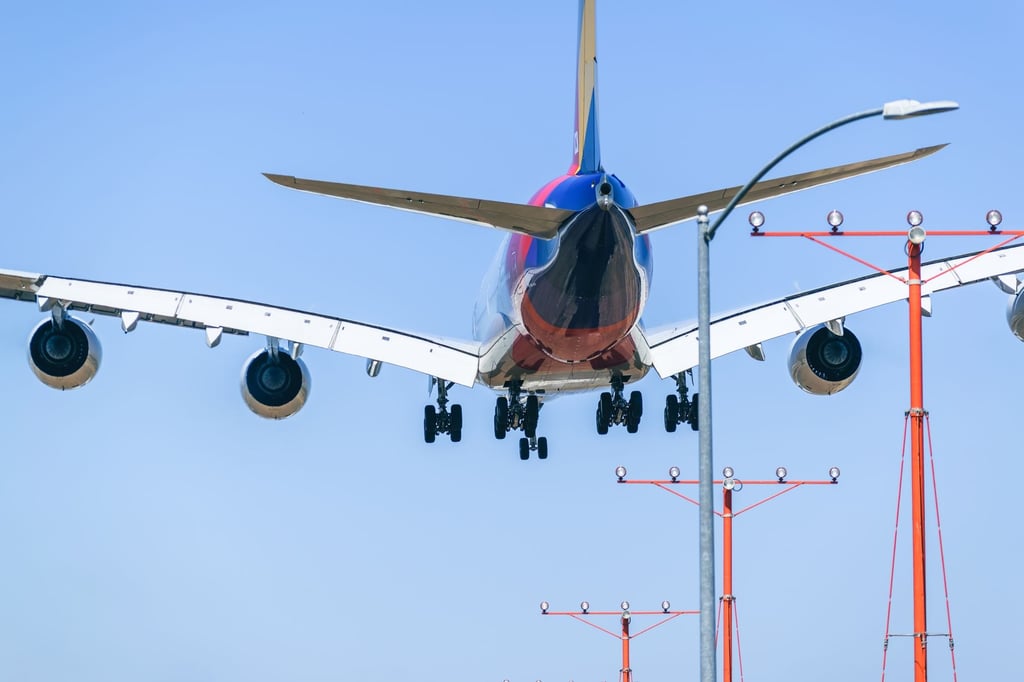
Few announcements make passengers more curious than “we have been asked to hold.” Here is what is actually happening up there.
What is a holding pattern?
One common aviation reference describes holding as a manoeuvre designed to delay an aircraft already in flight while keeping it within a specified airspace. For aircraft flying by instruments, it is usually a racetrack pattern based on a holding fix, which is a defined point in the sky. The pattern is made of two straight legs joined by two 180-degree turns.
Unless air traffic control or the published chart says otherwise, the standard pattern uses right-hand turns. In a standard pattern, each turn and each straight section is timed at about a minute, so one lap takes roughly four minutes. Wind changes the timing, and longer legs may be used when a long delay is expected.
Why do planes have to hold?
The main purpose is to delay an arriving aircraft that cannot land yet. The usual reasons are:
- Traffic congestion, when too many aircraft are arriving at once and they need to be spaced out.
- Poor weather at the airport, such as low visibility, until conditions improve.
- A runway that is unavailable, for example during snow removal or after an incident.
Holding keeps planes safely separated in the sky while the controller sorts out the sequence. At a busy airport, several aircraft may hold at different altitudes over the same point. Pilots are often directed into the hold in a way that fits the traffic flow.
Who decides, and how does it work?
Air traffic control issues the instruction. SKYbrary, the aviation safety knowledge base, notes that a holding clearance must at least state the fix where the aircraft is to hold and the altitude or flight level to maintain. Pilots fly the pattern and report back, and the controller releases them for the approach when the airport is ready.
Pilots also have to be sure the hold is safe. Pilot fuel-management guidance says that when a hold is issued, the pilot should check that there is enough fuel on board to hold until the expected further clearance time. If there is not, the crew should say so and ask for a better time, or plan to divert. This is why delays in the air are managed against fuel and not left open-ended.
What about fuel?
Flights carry fuel beyond what is needed to reach the destination. Flight planning typically includes extra fuel for delays, an alternate airport, and a final reserve. We are not giving numbers here because requirements differ between regulators and operators.
If a delay would eat into the reserve, the crew tells air traffic control. SKYbrary, using the ICAO definition, says a “minimum fuel” call means the flight is committed to land at a specific airport and cannot accept additional delay, and it is not an emergency by itself. If predicted fuel at landing falls below the planned reserve, the pilot should declare a fuel emergency. That crew call can change the sequence, so the plane may be given priority for landing.
One small aviation fact: the pattern is flown by the clock, with each turn and straight section timed at about a minute in the standard version. It is a rehearsed routine, much like a queue at a counter, only three-dimensional and with several aircraft stacked at different heights.
Does this happen at Indian airports?
Holding happens wherever traffic, weather or runway availability limit arrivals, and that includes India. Busy airports in India can see arrival queues at peak hours, and weather such as heavy rain or low visibility can slow arrivals. We do not have an official count of holds at Indian airports, so we are not quoting one.
For you as a passenger, the practical effect is a slightly later landing. Check live flight status before you leave for the airport or for pickup, and allow a little extra time around your connection if it is tight.
Common Questions
Is a holding pattern dangerous?
No. It is a standard procedure that pilots train for, flown under air traffic control instructions, and it keeps aircraft separated.
How long can a plane hold?
It depends on the delay and on the fuel on board. The pilot checks there is enough fuel to hold until the expected further clearance time, or the aircraft can divert to another airport.
Why are the turns usually to the right?
A standard pattern uses right-hand turns unless air traffic control specifies otherwise or a non-standard pattern is charted.
Does holding mean the plane will divert?
Not necessarily. Most holds end with a normal landing. A diversion is considered if the expected delay is longer than the fuel allows.
Can a plane skip the hold in an emergency?
An aircraft that declares an emergency can generally be given priority and may go directly to the airport.
Will I get compensation for a hold?
That depends on the airline’s policy and the length of the delay. Check the airline’s terms and DGCA passenger rules for the delay you actually had.
Planning your next trip? Search and compare flights on HappyFares, with zero convenience fee on domestic bookings, price alerts, and Meera, our AI assistant, to help you find a fare.
Rules and fees change; verify current specifics with the airline, DGCA, or the airport before you travel.

