
Tray tables are stowed and seat backs are put upright for takeoff and landing mainly for safety in an emergency. A reclined seat or a lowered tray table can slow passengers moving through the row, and loose items can be thrown around in an impact. Takeoff and landing are the phases when the crew must be ready to evacuate quickly.
Updated November 2026 · HappyFares
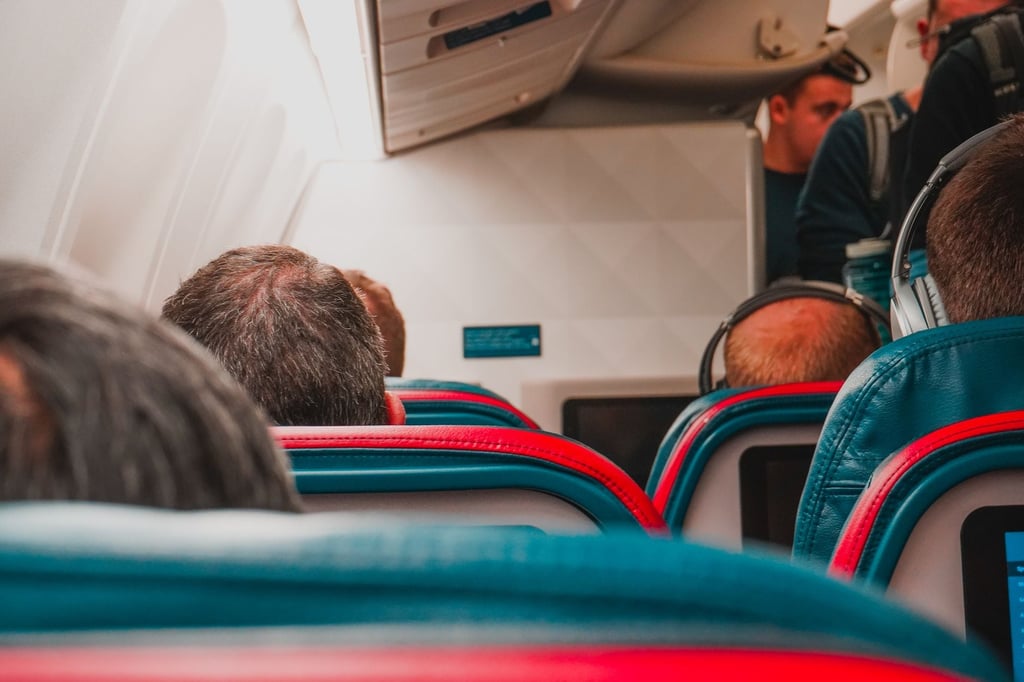
The request comes on every flight, usually just before the plane moves. It is easy to treat it as routine, but it has a clear reason behind it.
Why do seats have to be upright for takeoff and landing?
In the United States, the FAA has pointed to its rules for airlines that require seat backs to be in the upright position for takeoff and landing. In an FAA bulletin, the regulator said that a seat reclined to any degree is not in the upright position for emergency evacuation, which must be demonstrated when an aircraft type is certified. That bulletin is old, so treat it as an explanation of the principle rather than the latest wording.
The logic is simple. A reclined seat takes space from the passenger behind. In an evacuation, that passenger has to get out of the seat and into the aisle, and a seat leaning back into their space can make that slower. An upright seat also keeps the row and aisle as clear as the aircraft was designed to be.
Why must tray tables be stowed?
US rules state that an airline may not move an airplane on the surface, take off, or land unless each food and beverage tray and seat-back tray table is secured in its stowed position. The rules also cover serving carts and food or tableware at passenger seats during these phases.
The commonly given reasons are two. First, a lowered table can get in the way of a passenger trying to leave the seat in a hurry. Second, in a sudden stop an unlatched table or loose item can move and hurt someone. These explanations come from industry and aviation-media sources and fit the stated purpose of the rules, but we do not have a single regulator statement that lists both.
Why only takeoff and landing?
Takeoff and landing are the phases when the aircraft is close to the ground, moving fast, and any problem would call for a quick exit. Cruise is different, so you can recline a seat or use the table once the crew says it is fine to do so. Crews also check the cabin before descent, which is why you hear the reminder again before landing.
You may also be asked to open the window shade and to keep carry-on items stored. Sources describe these as helping passengers and crew see conditions outside and keeping aisles clear. The details can vary from airline to airline.
Does it apply the same way in India?
We have not matched the exact wording to a specific DGCA rule here, so we are not quoting an Indian regulation. For the precise rule on a given airline, check the airline’s own safety information or the DGCA.
The same rules do have exceptions in places. For example, the US seat-back rule has exceptions for certain seats. Cabin crew will tell you if a particular seat is treated differently.
What should you do if you do not want to stow something?
Follow the crew’s instruction. A laptop, a bottle, a phone on the tray, or a reclined seat while you nap all have to go away before takeoff and landing. If you are asleep, crew will usually wake you gently to put the seat upright. Keeping a small bag under the seat in front and the tray latched is the easiest approach.
- Latch the tray table before the doors close and the plane starts moving.
- Put the seat fully upright, not partly.
- Keep your seat belt fastened and snug.
- Stow loose items in the seat pocket or under the seat in front.
Common Questions
Is this an airline rule or a regulator rule?
Both. In the US, the FAA rules require tray tables to be stowed and seat backs to be upright for takeoff and landing. Airlines then repeat the instruction in their announcements and enforce it through crew checks.
Can I recline during takeoff if I am in the last row?
Follow the crew. Some seats have special rules, and the crew will tell you. Do not assume a seat is exempt.
Why is the window shade also opened?
Sources describe open shades as helping passengers and crew see conditions outside during these critical phases. It is a common practice, and exact policy depends on the airline.
Can I keep my laptop on the tray table?
No. During takeoff and landing the tray table must be stowed, and the laptop must be stored with it.
Is it safe to recline during cruise?
Yes, once the crew allows it, and a courteous check of the passenger behind helps on a short flight. On a long flight there may be seat-specific limits such as recline restrictions set by the airline.
Does the rule apply to small aircraft too?
The FAA has similar tray table rules for other operator types, but each category has its own text. Check with your operator.
Ready for your next trip? Search and compare flights on HappyFares, with zero convenience fee on domestic bookings, price alerts, and Meera, our AI assistant, to help you choose.
Rules and fees change; verify current specifics with the airline, DGCA, or the airport before you travel.

