
Binoculars are generally fine on Indian flights. Air India’s cabin baggage page lists binoculars among the personal items it accepts, and they pass through security like a camera. Telescopes and tripods are different: size decides whether they fit in a cabin bag, and a tripod with sharp spikes is safer in checked baggage. Check your airline for the current limits.
Updated November 2026 · HappyFares

Heading to a hill station, a wildlife reserve or a dark-sky trip, and want to bring your optics? Here is how binoculars, telescopes and tripods are usually handled on Indian domestic flights.
Are binoculars allowed in cabin baggage?
Yes, in most cases. Air India’s cabin baggage page lists binoculars, along with a camera or camera bag, as a personal item it accepts in addition to your cabin bag. Binoculars have no blade, no battery in the typical model and no liquid, so they are not a security concern in themselves. They show up on the X-ray as a dense, lens-heavy object, so keep them on top of the bag in a padded case and be ready to take them out if the screener asks.
Keeping binoculars with you is also the safer choice for the equipment. Lenses and prisms are easily knocked out of alignment, and a cabin bag stays under your own control. If you do check them, wrap them in clothing inside a hard case.
Can you take a telescope on a flight?
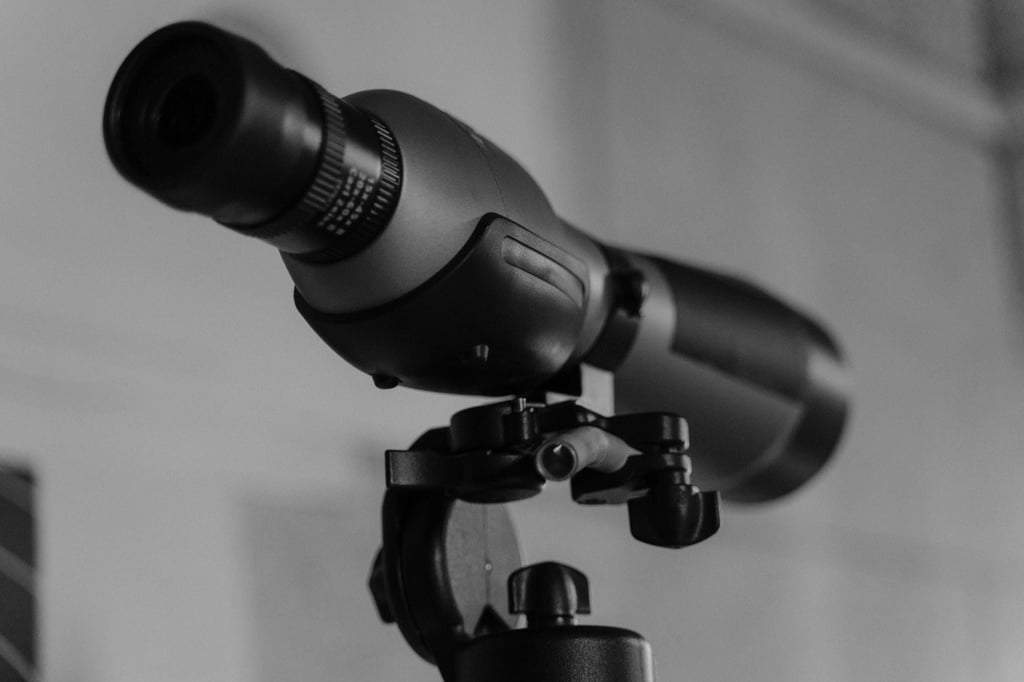
A telescope is mostly a size question. Cabin baggage has fixed limits. IndiGo, for example, publishes a cabin bag limit of 7 kg and maximum dimensions of 55 x 35 x 25 cm, and a full-size telescope tube with its mount will not fit. A compact travel scope or a small refractor might fit in a cabin bag or a camera-style backpack if it stays within the weight and size limit. Larger instruments are normally checked.
We did not find any Indian airline or security page that names telescopes specifically, so this guidance is general. A telescope is not a prohibited item in itself, but the airline can refuse a cabin bag that is over its size or weight limit, and it is the airline and the security staff at your airport who make the call on the day.
When you check a telescope, take the optics off the mount, put the lenses and eyepieces in a padded case that goes in your cabin bag if they fit, and pack the tube in a hard case with plenty of cushioning around it. Optical glass is more at risk from impact than from the flight itself.
What about tripods and mounts?
Tripods are the awkward part. Many travel tripods are short and fold small enough for a cabin bag, but they have metal legs and sometimes spiked feet. Security staff in India generally do not allow sharp or pointed items in cabin baggage, so a tripod with spikes or sharp metal points is better checked, or have the spikes removed or capped. Air India’s cabin baggage page says baggage beyond your permitted cabin bag and personal item must be checked in, so a separate tripod that does not fit inside your bag will need to go in the hold.
A practical approach: put the tripod and any mount in checked baggage along with the telescope tube, and keep the fragile eyepieces, filters and binoculars in your cabin bag.
What if the optics have batteries?
Some optical gear uses batteries, such as a laser rangefinder, a digital telescope or a camera attached to your scope. IATA’s guidance is that spare batteries and power banks must go in cabin baggage, never in checked baggage, and that up to 100 Wh is generally allowed in carry-on, with 100 to 160 Wh possible with airline approval. Spare batteries for your gear therefore belong in your cabin bag, with the terminals taped or in a pouch.
Did you know? IATA notes that if a battery fire starts in the hold of an aircraft, the crew cannot take immediate action to identify and extinguish it. That is the reason batteries stay with you in the cabin.
What about taking optics abroad or bringing them home?
Domestic rules are only part of the picture on an international trip. Customs rules for carrying optical equipment in and out of India, or into another country, are set by the customs authorities there, and we did not verify the current limits. If you are carrying valuable optics on an international trip, check the customs authority of the destination and of India, and keep the purchase bill with you.
Common Questions
Can I carry binoculars in my hand baggage in India?
Yes, usually. Air India lists binoculars as a personal item it accepts in the cabin. Keep them in a padded case so they are easy to remove at screening.
Is a telescope allowed in cabin baggage?
Only if it fits your airline’s cabin bag size and weight limit. A compact travel scope may, but a full-size telescope is normally checked.
Can I take a camera tripod on a flight?
A compact tripod that fits inside your cabin bag is often accepted. A tripod with sharp spikes is safer in checked baggage, and one that does not fit your bag has to be checked in.
Should I put binoculars in checked baggage?
You can, but cabin baggage protects them better. If you check them, use a hard case with padding.
Can spare batteries for my optics go in checked baggage?
No. IATA says spare batteries and power banks should never be placed in checked baggage. Keep them in your cabin bag.
Do I need to declare binoculars or a telescope at customs?
For domestic flights, no customs step applies. For international trips, check the customs rules of the countries involved and carry your purchase bill.
Planning a trip for birdwatching or stargazing? Search and compare flights on HappyFares, with zero convenience fee on domestic bookings and a price alert for your route.
Baggage and customs rules change. Verify current specifics with your airline, DGCA or the airport before you travel.

