
Flights are usually faster in one direction because of the jet stream, a band of strong upper-level wind that blows from west to east. Eastbound flights in the mid-latitudes often ride a tailwind, so they cover the ground faster. Westbound flights usually face a headwind, so the same aircraft takes longer. The plane’s airspeed is set by the flight plan and pilots; its speed over the ground changes with the wind.
Updated November 2026 · HappyFares
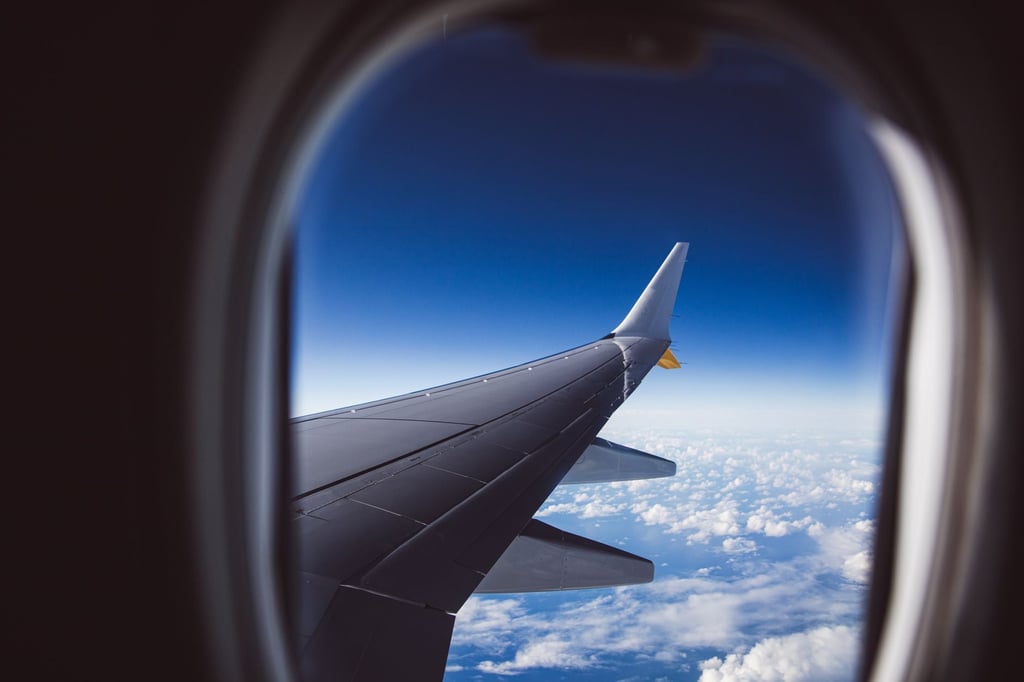
If you have ever noticed that the flight home takes longer than the flight out on a long route, the wind is the likely reason. Here is how it works, in plain terms.
What is the jet stream?
The jet stream is a narrow ribbon of fast-moving air high in the atmosphere. NOAA describes jet streams as winds that blow from west to east, typically occurring around 30,000 feet (9,100 metres) in elevation, within a height range of roughly four to eight miles. At their strongest, these winds can exceed 275 mph (442 km/h), according to the same NOAA page.
That height matters because it overlaps with where airliners cruise. A jet airliner on a long route usually flies in or near this layer, so the wind there has a direct effect on the trip.

Why does the jet stream make flights faster in one direction?
Think of walking on a moving walkway. Walk the same way it moves and you cover ground faster; walk against it and you go slower, even though your own pace has not changed. An aircraft is similar. Its airspeed, the speed through the surrounding air, stays within a planned range. Add a tailwind and the ground speed goes up. Add a headwind and the ground speed goes down.
Because the jet stream blows from west to east, an eastbound flight that stays in it gets a push, and a westbound flight that wanted to stay in it would be pushed back. This is why transatlantic flights from North America to Europe often take less time than the return journey. The wind is a big part of the difference, though the exact gap changes from day to day because the jet stream shifts and strengthens and weakens.
Do airlines plan routes around the wind?
Yes, in a practical sense. Airlines generally plan long flights using forecast winds, and the best route can change from one day to the next. On an eastbound flight the plan tends to favour the strong tailwind. On a westbound flight the plan tends to avoid the core of the jet stream and look for weaker winds, which can mean a different track from the eastbound one.
This is also why you may see the same flight number show different durations on different days. The schedule printed on your ticket is a planning figure. Real flying time depends on the winds on the day, along with air traffic, airspace and weather.
Does this apply to flights from India?
The same physics applies anywhere the jet stream is present. India-related long-haul routes are, broadly speaking, a mix of eastbound and westbound legs when you look at the full journey. A flight heading east across the mid-latitudes will generally benefit from the prevailing westerly wind, and a flight heading west will generally work against it.
The effect is not identical on every route. It depends on the latitude the aircraft follows, the season, and where the jet stream sits that day. For that reason, we would not promise a specific time saving on any particular route. If an airline publishes different durations for the outbound and return legs of the same route, wind is a likely contributor, along with routing and airspace restrictions.
One small aviation fact: because the jet stream only changes ground speed, a flight can show a very high speed on a flight tracker while the aircraft is flying at its normal speed through the air.
What does this mean when you book?
Expect the two directions of a long round trip to have different scheduled durations. Do not read it as a mistake. When you plan a connection after a long flight, give yourself room, because a strong headwind can add to the actual flying time, and a tailwind can bring you in earlier than the schedule shows.
- Check the departure and arrival times for each direction separately.
- Do not tie a tight onward connection to the very last minute of a long flight.
- Check live flight status on the day of travel for the latest estimate.
Common Questions
Is the jet stream the same as turbulence?
No. The jet stream is a band of fast wind. Turbulence can occur near the edges of strong wind zones, but a smooth ride inside or alongside the jet stream is also common.
Do planes fly faster through the air when there is a tailwind?
No. The plane’s airspeed stays in its planned range. A tailwind increases ground speed, which is the speed measured against the earth below.
Which way does the jet stream blow?
From west to east, according to NOAA.
Why do the outbound and return flights of the same route have different durations?
Prevailing winds are one of the main reasons. Airlines also publish times that reflect typical conditions for each direction, plus routing and airspace factors.
Can the jet stream cause flight delays?
It can change the actual flying time and influence the route. A strong headwind can add time to a flight, while a tailwind can shorten it.
Is the effect the same all year?
No. The jet stream moves and changes in strength, so the effect on any flight varies by day and season.
Planning a long trip? Search and compare flights on HappyFares, with zero convenience fee on domestic bookings, price alerts, and Meera, our AI assistant, to help you find the right fare.
Flight times, rules and fees change; verify current specifics with the airline, DGCA, or the airport before you travel.

