
Flaps and slats are movable panels on a wing. Slats sit on the leading edge and flaps on the trailing edge. When extended, they increase the wing’s area and curvature, which raises lift at low speed so the plane can take off and land slower. They also add drag, so they are retracted for efficient cruising.
Updated November 2026 · HappyFares
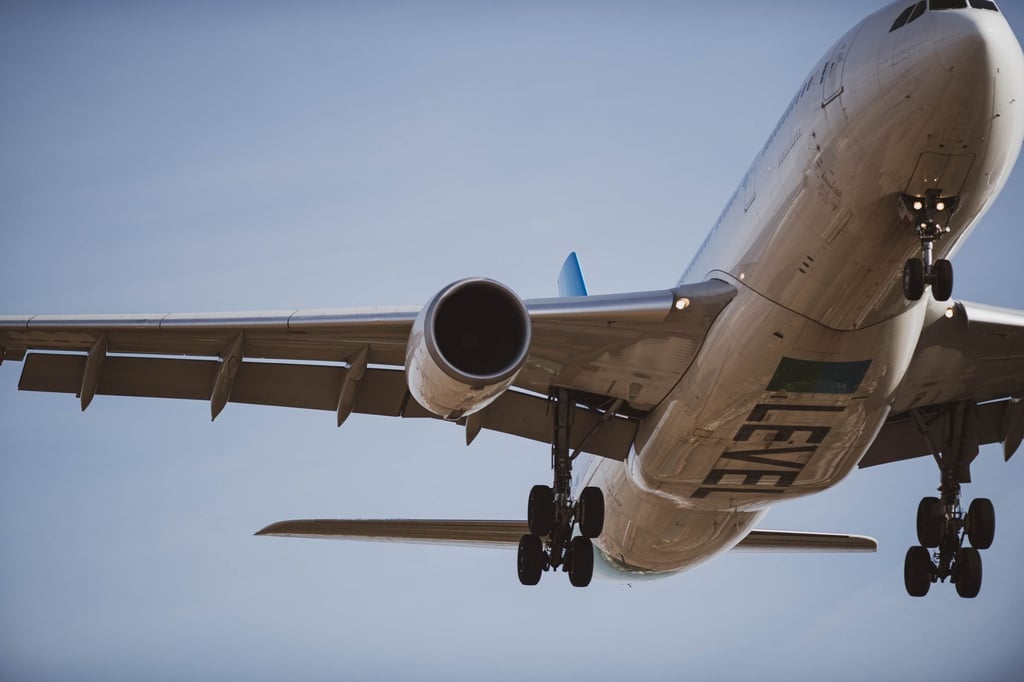
If you have a window seat over the wing, you may have seen panels slide out and tilt down as the plane gets ready to land. Those are flaps and slats, and they quietly change the shape of the wing.
What are flaps and slats?
Both are movable parts of the wing, built to ride on tracks set into the structure. The part on the leading edge, the front of the wing, is called a slat. The part on the trailing edge, at the back, is called a flap. NASA Glenn describes them as devices that increase lift during takeoff and landing, when airspeed is low.
When they move, they do two things. Flaps slide backward and slats slide forward, which increases the wing’s area. And they angle downward, which increases the camber of the airfoil, meaning how curved the wing’s cross-section is. More area and more camber both mean more lift.
Think of it as the wing changing from a cruising shape into a landing shape. A cruising wing is built to slice through the air efficiently at speed. Extending the panels turns it into a broader, more curved wing that can keep the plane flying at a gentler pace, and that is exactly what you want when the ground is close.
Why does a plane need them at low speed?
A wing makes lift because air flows over it. The slower the plane goes, the less lift a given wing makes. At cruise speed, a thin and fairly flat wing is efficient. But on takeoff and landing the plane is moving much slower, and that same wing would need an uncomfortably high speed to keep the aircraft in the air.
Extending flaps and slats lets the wing make the lift it needs at a lower speed. The practical benefit is that the plane can lift off and touch down at a slower speed than it otherwise could.
Do takeoff and landing use the same settings?
No. Flaps add drag, because their large surface projects into the airflow. That drag is the trade-off for extra lift, and what pilots want differs between the two phases. NASA Glenn explains that on takeoff the aim is high lift with low drag, so the flaps are set downward at a moderate angle. On landing the aim is high lift and high drag, so flaps and slats are fully deployed.
The extra drag on landing is useful. It helps the plane slow down and descend steadily on approach.
- Takeoff: moderate flap setting, balancing lift and drag.
- Landing: flaps and slats fully extended for maximum lift and drag.
- Cruise: retracted so the wing stays smooth and efficient.
Why are they retracted in cruise?
In the cruise, the plane flies fast and high, and extra drag only wastes fuel. With flaps and slats tucked in, the wing returns to its clean, smooth shape. They come out again for the approach to landing.
After touchdown, a different set of panels takes over. Spoilers on the top of the wing reduce lift and add drag, which helps the plane settle onto the runway and slow down.
How can you spot them from a window seat?
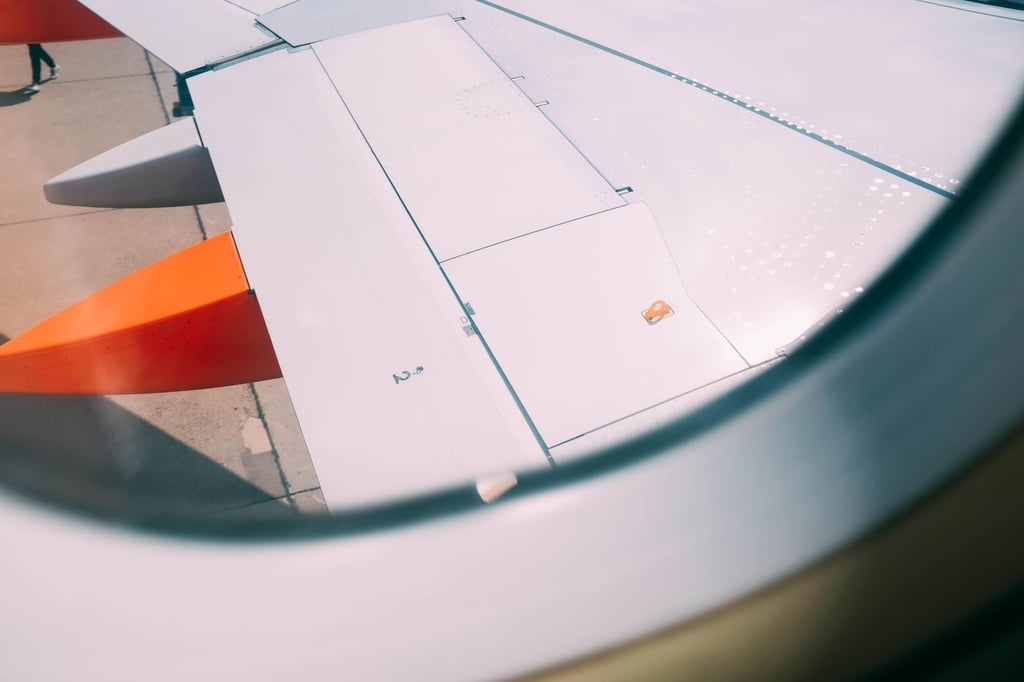
Choose a window seat with a clear view of the wing, and avoid the rows where the wing blocks the view. During approach, watch the back edge of the wing. You will see the flap panels slide backward and tilt downward, which is the area and camber change NASA Glenn describes. The slats on the front edge also move forward and down, though they are harder to see from many seats.
Did you know? Flaps and slats ride on metal tracks built into the wing, so the shape change you see during landing is a mechanical movement that is reversed when the panels are retracted.
If you cannot get a window seat, you can still follow the process. Flaps and slats are used at low speed, so they are out during the slow phases of the flight, the climb after takeoff and the approach to land, and tucked away in between.
Common Questions
What is the difference between a flap and a slat?
A slat is on the leading edge, at the front of the wing. A flap is on the trailing edge, at the back.
Do all planes have flaps?
Airliners use them as a standard part of the wing. NASA Glenn’s explanation uses an airliner as its example of a wing with both slats and flaps.
Why do flaps add drag?
Their large surface projects into the airflow and catches the air. That extra drag is helpful on landing because it helps slow the plane.
Is it normal to see the wing change shape?
Yes. It is a normal part of every takeoff and landing, and it is designed to happen.
Are flaps used in cruise?
Not normally. They are retracted so the wing stays efficient at high speed.
What are spoilers?
Spoilers are panels on the upper surface of the wing. They reduce lift and add drag after touchdown to help slow the plane.
Want a window seat to watch the wing at work? Search and compare flights on HappyFares, with zero convenience fee on domestic bookings, price alerts so you can book at the right moment, and Meera, our AI assistant, to help you find a flight.
Aircraft types and procedures differ. Verify current specifics with the airline, DGCA or the airport before you travel.

