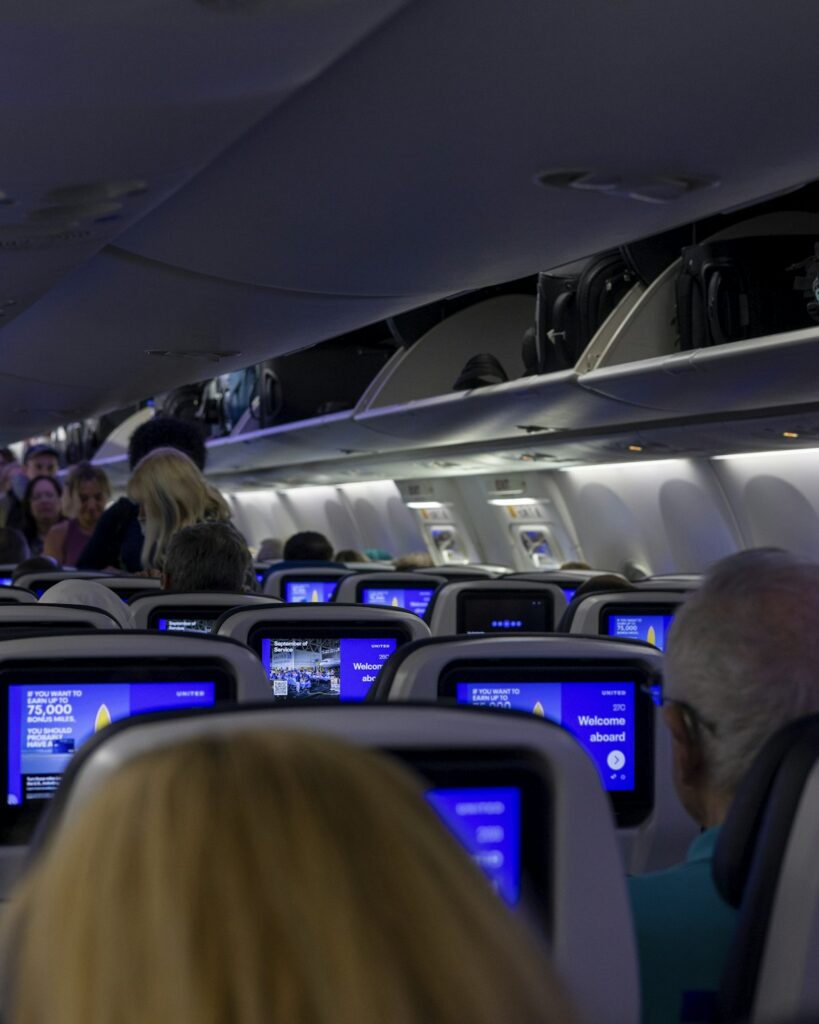

If an airline overbooks your flight and you are involuntarily denied boarding, DGCA rules entitle you to 200% of your basic fare (up to INR 10,000) if an alternate flight departs within one hour, or 400% of your basic fare (up to INR 20,000) if it departs later. The airline must also provide meals, refreshments, a phone call, and an alternate flight or full refund. Always check in early, get everything in writing, and file a complaint on AirSewa if the airline does not comply. Book through HappyFares for instant PNR-confirmed tickets that strengthen your claim.
What Is Overbooking and Why Do Airlines Do It?
You have a confirmed ticket, a boarding pass, and you are at the gate on time. Then the airline tells you there is no seat for you. This is denied boarding due to overbooking, and it happens more often than you might think on busy Indian domestic routes.
Overbooking is the practice of selling more tickets than the number of seats on an aircraft. Airlines do this based on statistical models that predict a certain percentage of passengers will cancel, no-show, or miss their connection. On average, 5-15% of booked passengers do not turn up for any given flight. By selling extra tickets, airlines try to fill every seat and keep fares affordable for everyone.
It is a perfectly legal practice in India. The Directorate General of Civil Aviation (DGCA) permits airlines to overbook flights, provided they follow strict rules on compensating passengers who are denied boarding as a result. The problem arises when more passengers show up than there are seats — and someone has to be left behind.
DGCA Rules on Denied Boarding — CAR Section 3 Series M Part IV
The primary regulation governing denied boarding in India is DGCA Civil Aviation Requirement (CAR) Section 3, Series M, Part IV, titled “Facilities to be provided to passengers by airlines due to denied boarding, cancellation of flights, and delays in flights.” This regulation has been updated multiple times, with the most recent amendments strengthening passenger protections.
When Do These Rules Apply?
The DGCA denied boarding rules apply when:
- You hold a confirmed ticket (not a waitlisted or standby ticket)
- You have completed check-in within the airline’s deadline (typically 45-60 minutes before departure for domestic flights)
- You have valid travel documents and are not denied boarding for security, health, or regulatory reasons
- The flight is operated by a scheduled Indian carrier on a domestic route
The rules do not apply if you are denied boarding because you arrived late for check-in, had incorrect documents, or for safety or security reasons.
Step 1 — The Airline Must Seek Volunteers First
Before involuntarily bumping anyone, the airline must first ask for volunteers who are willing to give up their seats in exchange for agreed-upon benefits. This is called voluntary denied boarding. The airline may offer:
- Travel vouchers or credit for future flights
- Cash compensation (amount negotiable)
- Free upgrade on the next available flight
- Meal vouchers and lounge access during the wait
If you volunteer, you can negotiate the terms. There is no fixed amount — it depends on the airline’s offer and your willingness to accept. Always ask for the offer in writing before agreeing.
Step 2 — Involuntary Denied Boarding and Compensation
If not enough passengers volunteer, the airline must involuntarily deny boarding to some passengers. In this case, the DGCA mandates specific compensation amounts:
| Scenario | Compensation | Maximum Cap |
|---|---|---|
| Alternate flight arranged within 1 hour of original departure | 200% of basic fare | INR 10,000 |
| Alternate flight arranged more than 1 hour after original departure | 400% of basic fare | INR 20,000 |
| No alternate flight provided / passenger chooses full refund | 400% of basic fare | INR 20,000 |
Basic fare here means the base fare excluding taxes, surcharges, and fees. The compensation must be paid immediately at the airport — in cash, by bank transfer, or by cheque, at the passenger’s choice. The airline cannot force you to accept travel vouchers instead of cash for involuntary denied boarding.
Additional Entitlements Beyond Cash Compensation
Besides the monetary compensation, when you are involuntarily denied boarding, the airline must also provide:
- Alternate flight — on the same airline or another airline, at no extra cost to you
- Meals and refreshments — appropriate to the waiting time
- Two phone calls, emails, or fax messages — free of charge
- Hotel accommodation — if the alternate flight is the next day, including airport transfers
- Full refund — if you choose not to travel, the airline must refund the full ticket amount (including taxes) within 7 days
Voluntary vs Involuntary Denied Boarding — Key Differences
Understanding the distinction is crucial because your rights and compensation differ significantly:
| Factor | Voluntary | Involuntary |
|---|---|---|
| Your choice? | Yes — you agree to give up your seat | No — airline bumps you against your will |
| Compensation amount | Negotiable (no fixed minimum) | DGCA-mandated (200% or 400% of basic fare) |
| Form of compensation | Vouchers, cash, upgrades — as agreed | Cash, bank transfer, or cheque — your choice |
| Can you refuse? | Yes — simply do not volunteer | No — but you must receive compensation |
Pro tip: If you are in no rush and the airline is asking for volunteers, consider volunteering — you can often negotiate a better deal than the mandatory compensation amount, especially on peak-hour flights.
Who Gets Bumped? The Priority Rules
When an airline must involuntarily deny boarding, DGCA guidelines state that passengers should be bumped in reverse order of check-in — meaning those who checked in last are denied boarding first. However, airlines also consider:
- Passengers with disabilities or reduced mobility — given priority to board
- Unaccompanied minors — cannot be denied boarding
- Passengers with connecting flights — may be given priority
- Fare class — passengers on discounted fares may be bumped before those on full-fare tickets
This is why checking in as early as possible is one of the best protections against being denied boarding. When you book through HappyFares, you receive instant booking confirmation with your PNR, allowing you to complete web check-in as soon as the window opens — typically 48 hours before departure for most Indian carriers.
What to Do If You Are Denied Boarding — Step-by-Step
Being told you cannot board your flight is stressful. Here is exactly what to do:
1. Stay Calm and Ask for the Reason in Writing
Request a written notice from the airline stating that you have been denied boarding and the specific reason (overbooking, aircraft change, etc.). This document is critical for any compensation claim.
2. Do Not Surrender Your Boarding Pass
Keep your boarding pass, ticket printout, and booking confirmation. These prove you had a confirmed seat and checked in on time.
3. Know Your Options
The airline must offer you a choice between:
- Option A: An alternate flight to your destination (on the same or different airline) plus cash compensation based on the delay
- Option B: A full refund of your ticket (including taxes) plus the 400% compensation
4. Demand Compensation on the Spot
Under DGCA rules, the compensation must be paid immediately at the airport. Do not accept vague promises of “we will process it later.” Insist on a cash payment, bank transfer, or a cheque before you leave the airport counter. If the airline offers only vouchers for involuntary denied boarding, remind them that DGCA rules require cash-equivalent payment at the passenger’s choice.
5. Claim Meals, Refreshments, and Accommodation
If you are waiting for an alternate flight, the airline must provide meals, refreshments, and phone calls. If the wait extends overnight, they must arrange hotel accommodation and airport transfers at their expense.
6. Document Everything
Take photos of the gate display, your boarding pass, any notices, and save all communication (emails, SMS) from the airline. Note the names of airline staff you interact with. This documentation is invaluable if you need to escalate your complaint.
How to File a Complaint and Claim Compensation
If the airline does not provide compensation at the airport, you have multiple channels to pursue your claim:
AirSewa Portal (DGCA)
Visit airsewa.gov.in or download the AirSewa mobile app. File a grievance with your flight details, ticket copies, and the denied boarding notice. DGCA monitors these complaints and follows up with the airline. Airlines typically respond within 15-30 days.
Airline’s Nodal Officer
Every Indian airline is required to have a nodal officer and an appellate authority for passenger grievances. Write a formal complaint (email is fine) with all supporting documents. The airline must acknowledge within 3 days and resolve within 30 days.
Consumer Forum
If the airline does not resolve your complaint, you can file a case in the District Consumer Disputes Redressal Commission. For claims up to INR 1 crore, you can approach the District Commission. Consumer courts have regularly awarded compensation to passengers denied boarding, often exceeding the DGCA minimum amounts by adding damages for mental harassment and inconvenience.
National Consumer Helpline
Call 1800-11-4000 (toll-free) or file online at consumerhelpline.gov.in. This can help mediate between you and the airline before going to the consumer forum.
Recent DGCA Updates and Trends in 2026
The DGCA has been progressively strengthening passenger rights in recent years. Key developments relevant to denied boarding in 2026 include:
- Stricter enforcement: DGCA has increased audits on airlines’ overbooking practices and penalised carriers who fail to compensate passengers promptly. Airlines that repeatedly violate denied boarding norms face hefty fines.
- Digital compensation: Airlines are now encouraged to process denied boarding compensation via UPI and instant bank transfer rather than issuing cheques, reducing the time passengers wait for their money.
- Transparency requirements: Airlines must clearly mention overbooking policies in their conditions of carriage and at the time of booking. DGCA has pushed for better disclosure so passengers understand the possibility before purchasing a ticket.
- AirSewa improvements: The AirSewa platform has been upgraded with faster grievance tracking and better integration with airline systems, making it easier to file and follow up on denied boarding complaints.
- Proposed compensation revision: There is ongoing discussion about raising the compensation caps to account for inflation and increased air fares, though revised amounts have not been formally notified as of April 2026.
How to Protect Yourself from Being Denied Boarding
While you cannot fully prevent overbooking, you can significantly reduce the risk of being the one bumped:
- Check in online as early as possible. Most airlines open web check-in 48 hours before departure. Passengers who check in last are bumped first.
- Arrive at the airport early. Even with web check-in, being physically present at the gate well before boarding time shows the airline you are there and ready.
- Select your seat in advance. Passengers with pre-assigned seats are less likely to be bumped than those without seat assignments.
- Book through a reliable platform. When you book on HappyFares, your ticket is PNR-confirmed and your booking details are instantly accessible — no ambiguity about your reservation status.
- Join the airline’s frequent flyer programme. Loyalty members are typically given boarding priority and are the last to be involuntarily denied boarding.
- Avoid the cheapest fare buckets on peak routes. Passengers on heavily discounted fares are sometimes bumped before those on higher fare classes.
- Keep your booking confirmation accessible. Have your PNR, e-ticket, and ID ready so there is zero ambiguity about your confirmed booking.
Overbooking on International Flights — What You Should Know
The DGCA CAR on denied boarding primarily covers domestic flights operated by Indian scheduled carriers. For international flights, the situation is more nuanced:
- Indian carriers on international routes: Generally follow their contract of carriage, which may mirror DGCA domestic norms but is not always identical. Check the airline’s specific policy.
- Flights to/from the EU: If you are flying on an EU-registered carrier or departing from an EU airport, the EU261 regulation provides strong protections, including compensation of EUR 250-600 depending on flight distance.
- Flights to/from the US: US Department of Transportation rules mandate compensation of up to 400% of the one-way fare (capped at USD 1,550) for involuntary denied boarding on US carriers.
When booking international flights on HappyFares, you can compare airlines and routes to choose carriers with the best passenger protection policies for your specific journey.
Frequently Asked Questions
What is overbooking and why do airlines overbook flights?
Overbooking means selling more tickets than available seats. Airlines do this because a predictable percentage of passengers cancel or no-show on every flight. By overbooking, airlines maximise seat utilisation and keep ticket prices lower for everyone. It is legal in India, but DGCA rules mandate compensation if passengers are denied boarding as a result.
How much compensation can I get for denied boarding in India?
Under DGCA rules, if you are involuntarily denied boarding on a domestic flight: 200% of your basic fare (up to INR 10,000) if an alternate flight departs within one hour of your original schedule, or 400% of your basic fare (up to INR 20,000) if the alternate departs later or no alternate is provided. The airline must pay immediately at the airport.
What is the difference between voluntary and involuntary denied boarding?
Voluntary denied boarding is when you agree to give up your seat in exchange for benefits the airline offers (vouchers, cash, upgrades). You can negotiate and refuse. Involuntary denied boarding is when the airline bumps you against your will because the flight is oversold and no one volunteered. DGCA-mandated compensation applies only to involuntary cases.
Can the airline deny boarding even if I have a confirmed ticket?
Yes. Overbooking can result in denied boarding even with a confirmed, paid ticket. However, the airline must first seek volunteers. If insufficient passengers volunteer, the airline bumps passengers in reverse check-in order and must provide full DGCA-mandated compensation, an alternate flight or refund, meals, and accommodation if needed.
How do I file a complaint if an airline denies me boarding without compensation?
Get the denied boarding reason in writing at the airport. Then file a complaint on the AirSewa portal (airsewa.gov.in) or the AirSewa mobile app with all supporting documents. You can also write to the airline’s nodal officer. If unresolved within 30 days, escalate to the DGCA Passenger Grievance Cell or file a case in the District Consumer Forum.
Do overbooking compensation rules apply to international flights from India?
DGCA CAR Section 3 Series M Part IV primarily covers domestic flights on Indian carriers. For international flights, compensation depends on the airline’s policy and the destination country’s rules. EU-bound flights on EU carriers follow EU261 (EUR 250-600). Flights on US carriers follow DOT rules (up to 400% of fare). Indian carriers on international routes generally follow their contract of carriage.
Final Thoughts
Denied boarding due to overbooking is an inconvenience no traveller wants to face, but knowing your rights turns a frustrating situation into one where you are in control. Indian passengers are well-protected under DGCA regulations — up to 400% of your basic fare in compensation, alternate flights, meals, accommodation, and a full refund option. The key is being informed, checking in early, and documenting everything if it happens to you.
When you book flights through HappyFares, you get instant PNR-confirmed tickets, real-time booking status, and a support team that can help you navigate any disruption — including denied boarding situations. Start your next trip with the confidence that comes from booking smart.
Have questions about your flight rights? Reach out to us at help.happyfares.in.