
Airplane windows are rounded because sharp corners concentrate stress. A pressurised fuselage swells and relaxes with every flight, and square corners let cracks start there. The square-cornered windows of the early jet airliner de Havilland Comet were part of the story behind two 1954 accidents. Later aircraft used oval or rounded windows to spread the load more evenly.
Updated November 2026 · HappyFares
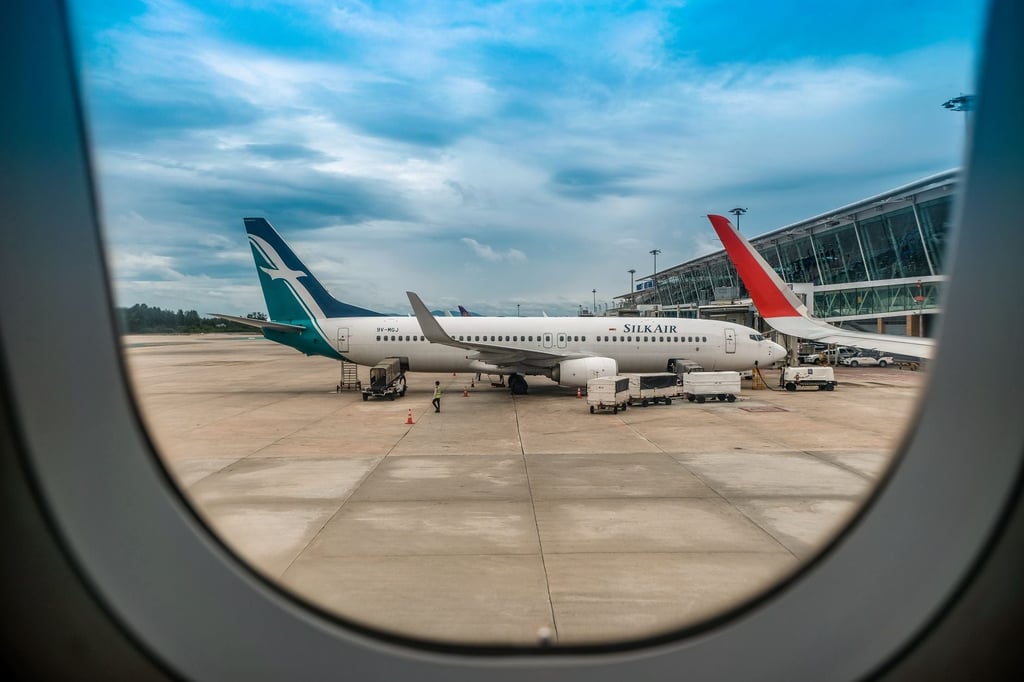
Look closely at your window seat next time. The glass is not a perfect circle, but it has no sharp corners either. That shape is the result of hard lessons in early jet travel.
Why are airplane windows round or oval?
An airliner flies with air inside the cabin held at a higher pressure than the thin air outside. That makes the fuselage skin behave a little like an inflated balloon, and it is under tension in every flight. Any hole cut in that skin, such as a window or a door, disturbs the way the load flows around it.
At a sharp corner, the load bunches up. Engineers call this a stress concentration: the metal near the corner carries a much higher stress than the metal elsewhere. A smoothly curved opening lets the load flow around it more evenly, so the peak stress is lower. That is why passenger windows have rounded corners.
Think of tearing a sheet of paper: a small nick at the edge is where the tear starts, and it then runs easily. A sharp window corner is a built-in nick, and a smooth curve removes it.
What did the de Havilland Comet accidents teach engineers?
The de Havilland Comet was an early jet airliner. In 1954, two Comet 1 aircraft broke up in flight. A BOAC aircraft was lost off Elba on 10 January 1954, and another Comet came down near Naples on 8 April 1954.
The investigation, led by the Royal Aircraft Establishment at Farnborough, concluded that the Elba accident was caused by structural failure of the pressure cabin brought about by metal fatigue. For the Naples accident, little wreckage was recovered, so a definite finding was not possible, though the same explanation was judged likely to apply. In a famous test, a Comet fuselage was pressurised and relaxed repeatedly in a water tank, and it failed after far fewer cycles than the designers had expected.

One account of the investigation says cracks started at a corner of a roof window. The Comet’s windows were square with only small rounded corners, which created stress concentrations, and minor defects left by riveting also acted as places for cracks to begin. Some writers argue the “square windows caused the crashes” story is too simple, because fatigue and manufacturing details also played a part. The fair summary is that the sharp window corners were a serious contributing factor, and designers took the lesson to heart.
Later airliners moved to oval and rounded windows, and that look has stayed with us ever since.
Why do airplane windows have three panes and a tiny hole?
Most airliner windows are built from several layers. The outer pane is designed to carry the pressure load. The middle pane is a back-up that can take over if the outer pane fails. The inner pane, the one you can touch, protects the middle pane from scratches and knocks.
The tiny hole you can see low on the window is usually called a bleed hole or breather hole, and it sits in the middle pane. It lets air pass between the cabin and the gap between the panes, so that the pressure is carried by the outer pane. It also lets moisture escape, so the window does not fog up between the layers.
Gizmodo describes the hole as a bleed valve that equalises pressure between the cabin air and the air between the panes, which keeps the pressure load on the outer pane and leaves the middle pane as a back-up.
Are all aircraft windows the same shape?
Not exactly. Passenger windows on modern airliners are typically rounded rectangles or ovals rather than true circles, and the exact size and proportions vary by aircraft type.
What stays constant is the principle: smooth curves where the fuselage skin is cut, so that the load flows around the opening instead of piling up at a corner.
Did you know that when you look at a rounded window, you are looking at a design lesson that dates from the early jet age? Not many everyday objects carry that much history.
Common Questions
Are airplane windows actually circular?
Mostly not. They are usually oval or a rounded rectangle, with no sharp corners. “Round” is a handy way to describe the shape.
Did square windows cause the Comet crashes?
For the Elba accident, investigators found the cause was metal fatigue in the pressurised cabin. Cracks were reported to start at a corner of a roof window, so the corner shape mattered, though riveting defects and fatigue under repeated pressurisation were also involved.
What is the small hole at the bottom of the window for?
It is a bleed or breather hole in the middle pane. It helps the outer pane carry the pressure load and lets moisture escape from between the panes.
Is it dangerous that the window has a hole in it?
No. The hole is part of the design, and the outer pane is the one that holds the pressure. The middle pane is a back-up.
Why does the window pane feel cold?
The air outside at cruising altitude is very cold, and the outer pane is exposed to it. The inner pane you touch is part of the layered design described above.
Want a window seat on your next trip? Search and compare flights on HappyFares, with zero convenience fee on domestic bookings, price alerts, and Meera, our AI assistant, to help you find the right fare.
Technical details and airline policies change; please verify current specifics with the airline or the aircraft manufacturer.

