
Airlines dim the cabin lights for takeoff and landing at night so that passengers’ and crew’s eyes are already adjusted to the darkness outside. If an emergency evacuation became necessary, people could then see exit signs, floor lighting and hazards outside more quickly. It is a precaution built into airline procedure, not a feature of every flight.
Updated November 2026 · HappyFares
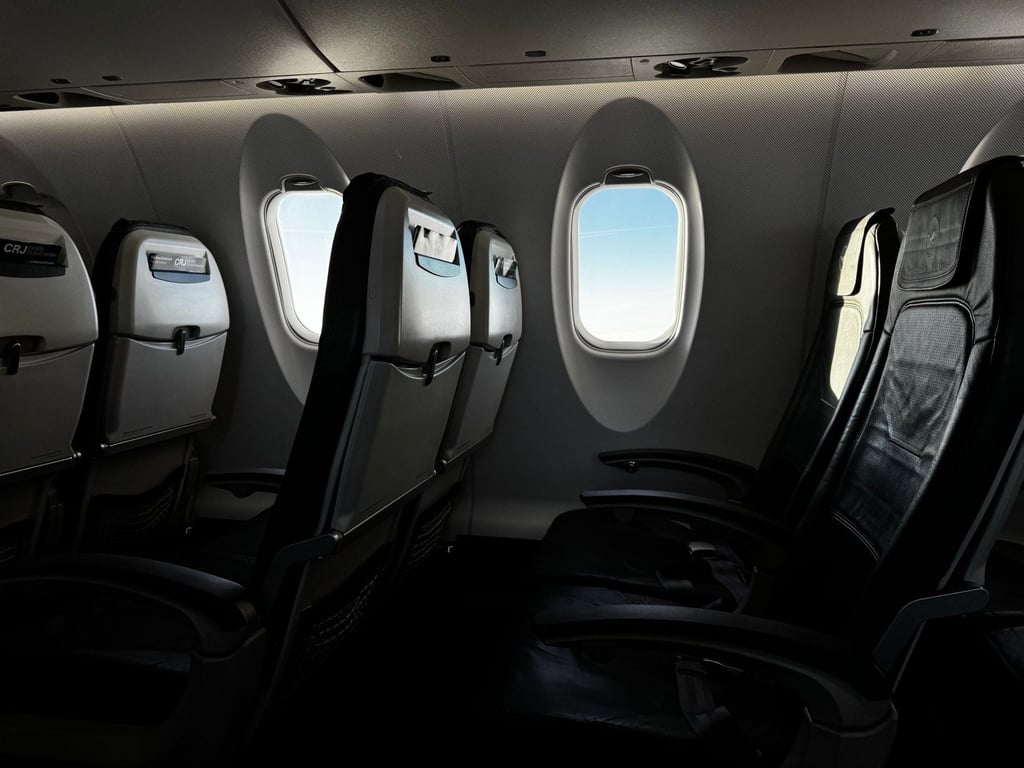
If you fly at night or in the early morning, you will have noticed the lights going low just before the wheels leave or touch the ground. It is deliberate, and it is about safety.
Why do cabin lights dim during takeoff and landing?
The main reason is dark adaptation. Human eyes take time to adjust when moving from bright light to darkness. If the cabin is brightly lit and an evacuation happens at night, you would step from glare into a dark outside and briefly see very little.
Airline pilot Patrick Smith, quoted by Afar magazine, puts it this way: by pre-adjusting your eyes, you will not be suddenly blinded while dashing for the doors in darkness or smoke. The cabin is lowered to roughly match the outside light, so the change is smaller.
Dimming is also not the same as darkness. The aim is to reduce the contrast between the cabin and the outside, not to leave the aircraft unlit.
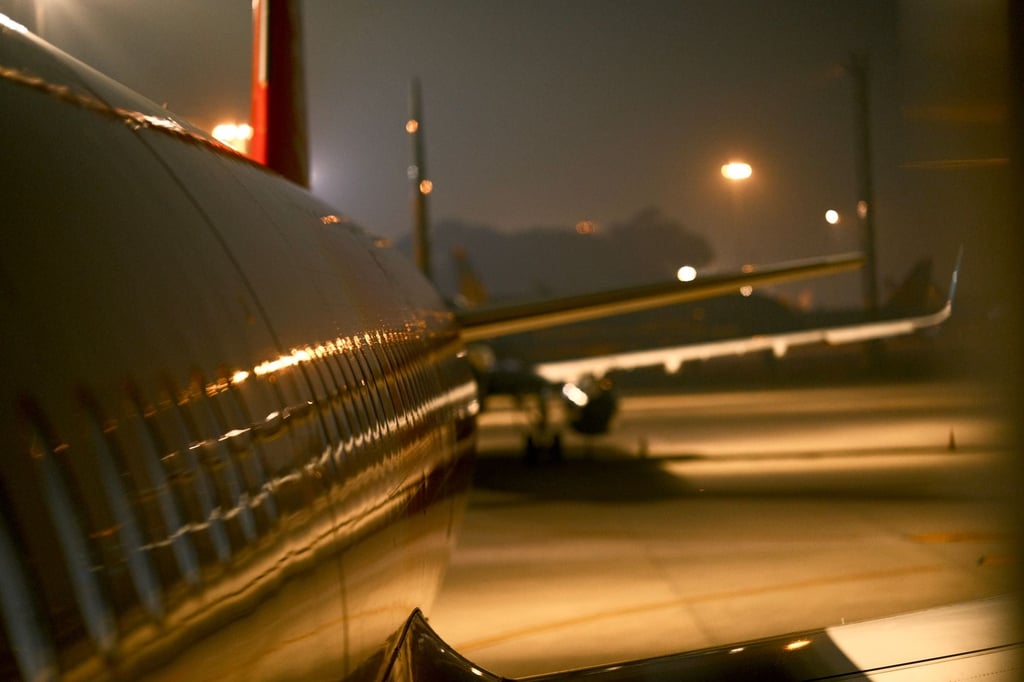
Why those two moments, and not mid-flight?
Takeoff and landing are the phases when an aircraft is close to the ground and moving at speed near other traffic, so they are the moments when problems such as a rejected takeoff, a runway excursion or a hard landing are most likely to occur. An evacuation after such an event would be sudden, with little warning.
During the cruise, the risk profile is different, and the cabin is usually kept comfortable for reading, working and serving the cabin. That is why you see lights come back up once the aircraft has settled into level flight.
Does dimming also help you see exits and outside hazards?
Yes, there are two further benefits that travel and aviation writers commonly mention.
- Exit signs and floor lighting stand out. Illuminated exit signs and floor path lighting are much easier to see when the general cabin light is low. Regulators such as the US Federal Aviation Administration and the European Union Aviation Safety Agency require exit paths to stay visible in darkness, and dimming supports that goal.
- Less glare on the windows. With lower interior light, there are fewer reflections on the glass, so crew and passengers can more easily spot fire, smoke or debris outside the aircraft.
Some pilots also say that bright cabin light can reflect off a wet runway at night, though this is a lesser point than the evacuation reason.
Is it a legal rule or an airline practice?
It is best described as an airline safety practice. We found no specific FAA, EASA or DGCA rule that says cabin lights must be dimmed for takeoff and landing. Some articles describe it as a requirement, but they do not cite a regulation. What regulators do require is that emergency exit signs and escape path lighting be visible in the dark.
So what you see can vary a little by airline, aircraft type and whether the flight is in daylight. If you want to know a particular airline’s procedure, its customer support team is the right place to ask.
Does dimming the lights save power?
Not in any way that matters. Sources that discuss it say energy saving is not the purpose, and one notes that any saving is minimal. This is a safety step, and a cheap one.
Did you know that the dimming is paired with lighting that works in the dark? The Afar article notes that floor-level exit lighting often uses photoluminescent materials that keep working even if the aircraft loses power.
You can use the dimmed moment to your advantage. Glance at the safety card in the seat pocket, notice which exit is nearest and how many rows away it is, and look for the floor lighting. It costs nothing, takes a few seconds, and is the sort of habit that frequent flyers tend to share. If you are sitting in an exit row, listen carefully to the crew’s briefing, because those seats come with extra responsibilities.
Common Questions
Do cabin lights dim on daytime flights too?
The dimming is mainly done when takeoff or landing happens in the dark, because that is when your eyes need to adjust. Daytime procedures can differ by airline.
Is dimming the cabin lights mandatory?
We could not find a regulation that makes it mandatory. It is a widely used airline safety procedure. Regulators do require exit path lighting to be visible in darkness.
How long do eyes take to adjust to the dark?
Fully adjusting can take a good while, longer than a typical takeoff or landing. That is why the lights are lowered ahead of the critical phase rather than at the last second.
Does dimming help the pilots?
Some pilots mention cabin glare reflecting off wet runways at night as a minor point, but the main reason given is evacuation readiness for passengers and crew.
Will the lights stay low for the whole flight?
No. The dimming is tied to the takeoff and landing phases, and lights typically come back up once the aircraft is settled in level flight.
Booking a night flight? Search and compare flights on HappyFares, with zero convenience fee on domestic bookings, price alerts, and Meera, our AI assistant, to help you find a fare that fits.
Procedures and rules change; please verify current specifics with the airline, DGCA or the airport before you travel.

