
At most Indian airports the CISF frisks passengers and checks cabin baggage before you reach the boarding gate. Expect your hand baggage to go through an X-ray scanner, you to pass through a metal detector, and a pat-down frisk. Rules are set by the Bureau of Civil Aviation Security (BCAS), and liquids in hand baggage are limited to 100 ml per container.
Updated November 2026 · HappyFares
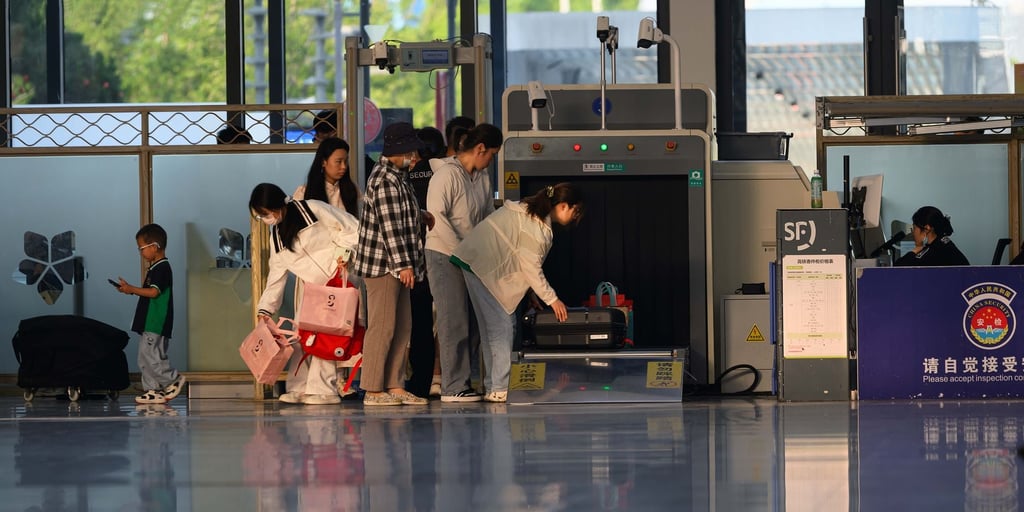
The security check is the same idea everywhere, but the details can vary by airport. Here is the process, in the order you will meet it.
Who is CISF and what do they do at the airport?
The Central Industrial Security Force (CISF) is the force you meet at the security checkpoint of most Indian airports. Its usual role is to frisk passengers and check their cabin baggage. The rules it follows are set by the Ministry of Civil Aviation and the Bureau of Civil Aviation Security (BCAS), the regulator for aviation security in India.
In May 2025, for a limited period, BCAS temporarily widened CISF’s role to supervise cargo and in-line hold baggage screening at civil airports. For a normal passenger, the part that matters is the checkpoint: screening you and your cabin bags.
What are the steps at the security check?
The exact layout differs by airport, but the order is usually the same.
- Entry check: At the terminal entrance your ticket or boarding pass and a photo ID are checked.
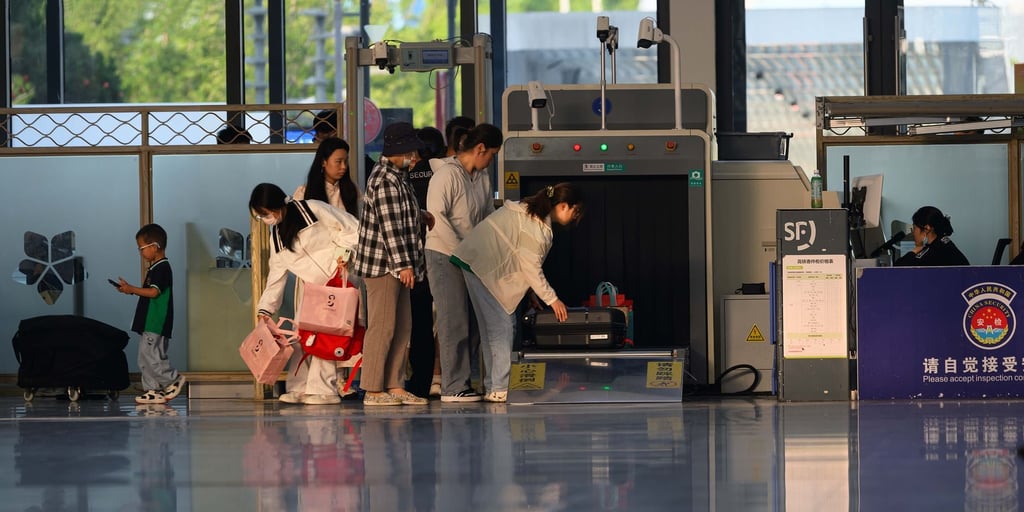
- Bag screening: Place your cabin bag on the conveyor to go through the X-ray machine. Some airports ask you to take laptops and tablets out and put them in a tray, so follow the signs and the officer’s instructions.
- Metal detector and frisking: You walk through a door-frame metal detector. A CISF officer may then do a hand-held scan or a pat-down frisk. Remove belts, coins and phones if asked.
- Bag recheck: If the scanner operator flags your bag, an officer may ask you to open it for a manual check.
- Collect and go: Pick up your things from the tray and move to the boarding area.
If you are carrying anything unusual, mention it to an officer before the check starts. Allow plenty of time, since queues move at different speeds at different hours.
What can you carry in hand baggage, including liquids?
Airport operators citing BCAS rules state that liquids in hand baggage must be in containers of 100 ml or less, kept in a clear resealable bag. Air India’s cabin baggage page also tells passengers not to carry liquids, gels and aerosols over 100 ml in cabin bags. Items bought after security, such as duty-free liquids in a sealed tamper-evident bag, are generally treated differently, but ask the shop and the airline.
Medicines you need during the flight are often treated differently from other liquids, but rules vary, so carry the prescription and ask your airline or the airport. Beyond that, a good rule is: if an item is sharp, flammable or could be seen as a weapon, put it in checked baggage or leave it at home. A January 2026 report said India has not publicly relaxed the 100 ml limit, though some countries are changing their own rules, so always follow the signs at your airport.
What about the cabin baggage tag and stamp?
In the past, CISF stamped or tagged cabin bags after screening. From 2017, stamping and tagging of hand baggage for domestic passengers was dropped at a growing list of airports (23 airports by November 2017, according to news reports), after BCAS, CISF and the airport operators reviewed security and camera coverage at each one. It is not a single national rule, so the process you see depends on the airport.
I could not find a current official BCAS notice that settles where tags or boarding-pass stamps are in force today. If an officer asks for a stamp or tag at your airport, comply with it, and do not remove a tag until you have been told you can.
Where does Digi Yatra fit in?
Digi Yatra is a voluntary, face-recognition-based facility promoted by the Ministry of Civil Aviation. Registered passengers scan the barcode or QR code of their boarding pass at the entry e-gate, and a camera compares their face with the registered Digi Yatra ID. It works at entry, at the security hold area and at the boarding area, and news reports put the number of airports with Digi Yatra at roughly 38 to 39, a figure that keeps growing, so check the Digi Yatra app for your airport.
The e-gate checks who you are. It does not replace the physical screening described above, so plan to put your cabin bag through the scanner as usual and follow the officers’ instructions.
Common Questions
Is CISF at every airport in India?
CISF is at most large airports, but not necessarily every one. Smaller airports may have different security arrangements. Check with the airport.
Can CISF open my bag?
Yes. If the X-ray operator flags an item, an officer may ask you to open the bag for a manual check.
What is the liquids rule in hand baggage?
Containers of 100 ml or less, in a clear resealable bag, are the standard rule, with exceptions for medicines.
Do I need to remove my laptop?
At many checkpoints, yes, laptops and tablets come out of the bag and go into a tray. Some lanes may differ, so follow the signs.
Is Digi Yatra compulsory?
No, it is voluntary. You can use the regular entry and ID check at any airport.
How early should I reach the airport?
Follow your airline’s check-in and boarding-gate timings. They are on your ticket, and they vary by airline and airport.
Ready for your next trip? Search and compare flights on HappyFares with zero convenience fee on domestic bookings, set price alerts, and ask Meera, our AI assistant, for help finding the right flight.
Rules change, so verify current specifics with the airline, BCAS or the airport before you travel.

